Nearly every american business owner is searching for an edge where digital marketing truly delivers. With over 90 percent of consumers beginning their product search online, understanding digital strategies is no longer optional. The world of online marketing changes rapidly, yet knowing the core concepts gives you the tools to reach more people, drive real growth, and measure success. This guide lays out what matters most so you can approach digital marketing with clarity and confidence.
Table of Contents
- Defining Digital Marketing and Core Concepts
- Types of Digital Marketing Channels Explained
- How Digital Marketing Strategies Drive Growth
- Lead Generation and Measuring ROI Effectively
- Common Digital Marketing Pitfalls to Avoid
Key Takeaways
| Point | Details |
|---|---|
| Digital Marketing Definition | Digital marketing involves promoting products and services using digital technologies and online channels to effectively reach consumers. |
| Core Components | Major components include SEO, content marketing, social media marketing, email marketing, and paid advertising, each serving unique functions in driving business growth. |
| Lead Generation Importance | Effective lead generation is crucial for success; it requires targeted strategies and clear measurement of return on investment (ROI) to optimize performance. |
| Common Pitfalls | Businesses should avoid common mistakes like neglecting audience targeting and proper analytics, which can undermine marketing efforts and waste resources. |
Defining Digital Marketing and Core Concepts
Digital marketing represents the strategic approach of promoting products, services, and brands using digital technologies and online channels. According to Villanova University, digital marketing encompasses all marketing efforts that utilize electronic devices or the internet to reach consumers across various digital platforms.
At its core, digital marketing involves leveraging multiple online channels to connect with potential and existing customers. These channels include search engines, social media platforms, email marketing, websites, and mobile applications. As Southern New Hampshire University explains, the primary goal is promoting products or services through targeted digital strategies that engage current and prospective customers more effectively than traditional marketing methods.
The key components of digital marketing include search engine optimization (SEO), content marketing, social media marketing, email marketing, and paid digital advertising. Each of these strategies serves a unique purpose in helping businesses expand their online presence, attract potential customers, and drive measurable results.
 By utilizing data-driven approaches and sophisticated targeting techniques, digital marketing enables small to medium-sized businesses to compete effectively in an increasingly digital marketplace.
Understanding these core concepts is essential for businesses looking to develop a comprehensive digital marketing strategy. The Digital Marketing Terminology Explained guide can provide additional insights into the specific language and techniques used in this dynamic field.
Types of Digital Marketing Channels Explained
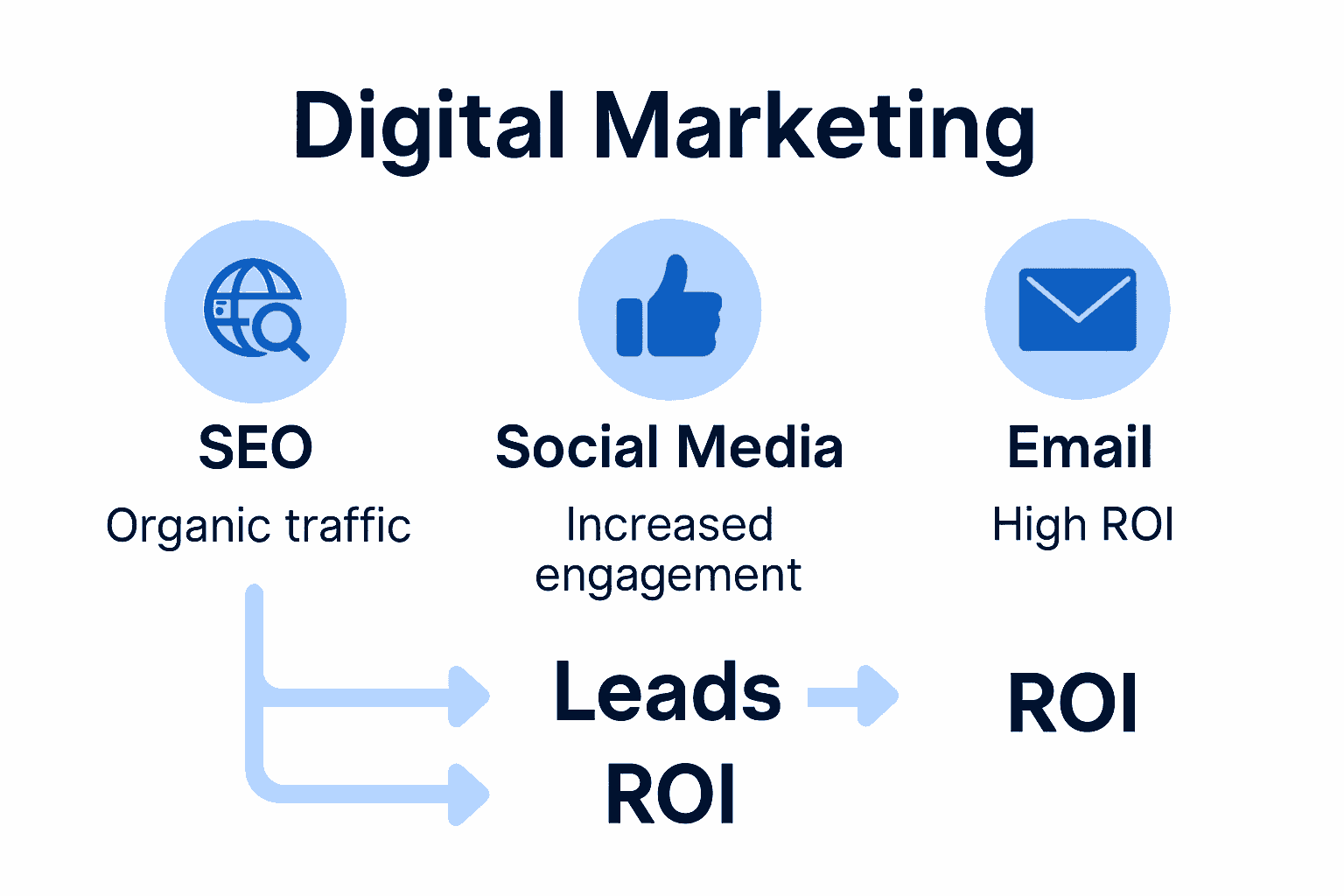
Digital marketing encompasses a diverse range of online channels that enable businesses to reach and engage their target audiences effectively. According to GeeksforGeeks, these channels include search engine optimization (SEO), content marketing, social media marketing, email marketing, and paid advertising, each serving unique roles in connecting with potential customers.
The primary digital marketing channels can be categorized into several key strategies. Coursera highlights that these channels extend beyond traditional online platforms to include social media, email campaigns, paid digital advertisements, digital events, word of mouth marketing, and even integrated traditional media approaches. Search engine marketing remains a critical component, allowing businesses to increase visibility through organic and paid search results.
Small to medium-sized businesses can leverage these channels in different combinations to create comprehensive marketing strategies. Social media platforms like Facebook, Instagram, and LinkedIn offer targeted advertising and organic engagement opportunities. Email marketing provides direct communication with potential customers, while content marketing through blogs, videos, and podcasts helps establish thought leadership and build trust. Paid digital advertising, including Google Ads and social media ads, enables precise audience targeting and immediate visibility.
To gain deeper insights into selecting and implementing these digital marketing strategies, the Performance Marketing Explained guide offers valuable strategic perspectives for business owners looking to optimize their digital marketing approach.
How Digital Marketing Strategies Drive Growth
Digital marketing strategies are powerful tools that enable businesses to expand their reach, attract new customers, and drive sustainable growth. According to International Institute of Digital Marketing Consultants, successful digital marketing requires a deep understanding of the audience, creating engaging content, leveraging search engine optimization (SEO) for visibility, and building trust through authenticity.
The growth potential of digital marketing lies in its ability to precisely target and engage potential customers across multiple channels. Targeted advertising allows businesses to reach specific demographics, interests, and behaviors with unprecedented accuracy. By utilizing data analytics and advanced targeting techniques, companies can create personalized marketing experiences that resonate with their ideal customer base, significantly improving conversion rates and return on investment.
Small to medium-sized businesses can implement several key strategies to drive growth through digital marketing. These include developing a comprehensive content marketing strategy, optimizing website performance for search engines, creating engaging social media campaigns, and implementing email marketing programs that nurture leads. Paid advertising platforms like Google Ads and social media advertising offer scalable options for businesses to expand their visibility and attract potential customers quickly and efficiently.
To dive deeper into developing effective growth strategies, the Role of Digital Marketing guide provides comprehensive insights for business owners looking to maximize their digital marketing potential and drive sustainable business growth.
Lead Generation and Measuring ROI Effectively
Effective lead generation is the cornerstone of successful digital marketing strategies for small to medium-sized businesses. According to Coursera, successful lead generation involves utilizing channels like social media and email marketing to attract and engage potential customers. Lead generation requires a strategic approach that combines targeted content, compelling value propositions, and multiple touchpoints to convert interested prospects into qualified leads.
Measuring return on investment (ROI) is crucial for understanding the effectiveness of digital marketing efforts. Southern New Hampshire University emphasizes that measuring ROI involves analyzing data from various channels, including search engine optimization and email marketing, to make data-driven decisions. Key performance indicators businesses should track include conversion rates, customer acquisition costs, lead quality, and total revenue generated from marketing campaigns.
Small businesses can implement several practical strategies to optimize lead generation and ROI measurement. These strategies include creating targeted landing pages, developing lead magnets like free guides or webinars, implementing marketing automation tools, and using advanced tracking technologies. Sophisticated digital marketing approaches enable businesses to capture detailed insights about potential customers, track their journey through the sales funnel, and continuously refine marketing strategies based on real-world performance data.
For a comprehensive deep dive into generating high-quality leads and maximizing marketing performance, the guide on generating leads for small businesses online offers actionable insights and proven strategies for business growth.
Common Digital Marketing Pitfalls to Avoid
Digital marketing success requires strategic planning and awareness of potential missteps that can derail marketing efforts. According to Villanova University, common pitfalls include neglecting to set clear objectives, failing to understand the target audience, and not utilizing data analytics to inform strategies. Small to medium-sized businesses often struggle with creating coherent and effective digital marketing approaches due to these fundamental challenges.
One of the most critical mistakes businesses make is attempting to market to everyone instead of focusing on a specific target audience. Audience segmentation is crucial for developing precise marketing messages that resonate with potential customers. This means going beyond basic demographics and developing deep insights into customer behaviors, pain points, and motivations. Without a clear understanding of who your ideal customer is, marketing efforts become scattered and ineffective, wasting valuable resources and generating poor returns.
Technical execution can also sabotage digital marketing efforts. Common technical pitfalls include poorly designed websites with slow loading times, non-mobile-friendly interfaces, inconsistent branding across digital platforms, and inadequate tracking of marketing performance. Businesses must invest in robust digital infrastructure, ensure seamless user experiences, and implement comprehensive analytics tools that provide actionable insights into campaign performance and customer interactions.
To help navigate these challenges and develop more effective digital marketing strategies, the online advertising guide offers comprehensive insights for businesses looking to optimize their digital marketing approach and avoid common implementation mistakes.
Unlock Growth Potential with Expert Digital Marketing Solutions
Understanding what digital marketing truly entails is the first step toward transforming your small to medium-sized business into an online powerhouse. This article highlights how crucial it is to develop clear objectives, leverage targeted advertising, and measure ROI carefully to overcome common marketing challenges. If you find yourself struggling to reach the right audience or generate consistent, high-quality leads, you are not alone. Many businesses face these hurdles without a tailored strategy that aligns with their unique goals.
Click Thrive Marketing specializes in optimizing Google Ads campaigns and lead generation to deliver measurable results that drive growth. By focusing on strategic campaign management and customer engagement, we help businesses like yours cut through digital noise with precision and real data-driven insights. Explore proven approaches and avoid common pitfalls by visiting our Uncategorized Archives – Click Thrive Marketing for practical tips and expert guidance.
Don’t let your digital marketing efforts fall short. Take control of your online advertising today by partnering with specialists who manage over $30 million in Google Ads spend with award-winning strategies. Visit our website Click Thrive Marketing to discover how to maximize your ROI and generate the leads your business deserves. Your next step toward sustainable growth starts here.
Frequently Asked Questions
What are the core concepts of digital marketing?
Digital marketing core concepts include search engine optimization (SEO), content marketing, social media marketing, email marketing, and paid digital advertising. These elements work together to enhance a business’s online presence and engage customers effectively.
How can small businesses utilize digital marketing to drive growth?
Small businesses can leverage digital marketing by developing a comprehensive content strategy, optimizing their websites for search engines, running engaging social media campaigns, and utilizing email marketing. Paid advertising options like Google Ads can also help increase visibility quickly.
What are the key metrics to measure in digital marketing?
Key metrics to measure in digital marketing include conversion rates, customer acquisition costs, lead quality, and total revenue generated from marketing campaigns. These metrics help businesses assess the effectiveness of their marketing strategies and make data-driven decisions.
What common pitfalls should businesses avoid in digital marketing?
Common pitfalls in digital marketing include neglecting to set clear objectives, failing to understand the target audience, and lacking adequate data analytics. Businesses should focus on audience segmentation and invest in a strong technical infrastructure to enhance their marketing efforts.
Recommended
- The Essential Guide to the Role of Digital Marketing – Click Thrive Marketing
- Digital Marketing Terminology Explained: Complete Guide – Click Thrive Marketing
- Business Growth Strategies Explained: Complete Overview – Click Thrive Marketing
- What Is Online Advertising? Complete Digital Guide – Click Thrive Marketing
- Post | Tulip Films