Nearly 80 percent of american businesses now rely on digital ads to reach customers online. The rapid shift to digital platforms has transformed how brands connect with audiences, making the world of online advertising more important than ever. With so many formats, channels, and targeting methods available, understanding digital ads is vital for anyone wanting to keep up in today’s competitive market. This guide unpacks the core ideas every american business should know to succeed with digital advertising.
Table of Contents
- Defining Digital Ads And Core Concepts
- Major Types Of Digital Advertising Channels
- How Digital Ad Targeting Works Today
- Maximizing ROI With Campaign Optimization
- Common Mistakes And Industry Best Practices
Key Takeaways
| Point | Details |
|---|---|
| Digital Advertising Essence | Digital advertising connects businesses to potential customers through various online channels, offering more targeted engagements than traditional methods. |
| Diverse Advertising Channels | Key channels include search engine advertising, social media ads, display ads, video ads, email marketing, and native advertising, each providing unique advantages based on campaign objectives. |
| Precise Targeting Mechanisms | Digital ad targeting utilizes advanced data analytics and technologies like cookies and pixels to create personalized ad experiences that enhance engagement. |
| Optimization for ROI | Continuous campaign optimization is essential, using metrics and A/B testing to refine strategies and improve marketing performance over time. |
Defining Digital Ads and Core Concepts
Digital advertising represents a dynamic and complex ecosystem of online promotional strategies designed to connect businesses directly with potential customers through targeted digital channels. According to Coursera, digital advertising encompasses a comprehensive network involving various platforms, technologies, and strategic approaches that enable businesses to reach audiences more precisely than traditional marketing methods.
At its core, digital advertising involves placing promotional content across digital platforms like websites, social media networks, search engines, mobile apps, and streaming services. These advertisements can take multiple forms, including banner ads, text-based search ads, video advertisements, social media sponsored content, and programmatic display ads. Open University emphasizes that successful digital advertising requires strategic integration of visual storytelling, design principles, and targeted messaging to effectively engage potential customers.
The digital advertising landscape is characterized by several key components that make it uniquely powerful:
- Precise Targeting: Unlike traditional advertising, digital ads can be narrowly targeted based on demographics, interests, behavior, and specific online interactions
- Real-Time Analytics: Advertisers receive immediate feedback on ad performance, including impressions, clicks, conversions, and return on investment
- Cost-Effectiveness: Digital advertising often provides more flexible pricing models like pay-per-click (PPC) or cost-per-thousand impressions (CPM)
- Interactive Capabilities: Many digital ad formats allow direct engagement, such as clickable links, embedded forms, or immediate purchase options
Understanding these core concepts is crucial for businesses looking to leverage digital advertising effectively. Each platform and ad format offers unique advantages, and successful campaigns require a nuanced approach that aligns with specific business goals and target audience behaviors.
Major Types of Digital Advertising Channels
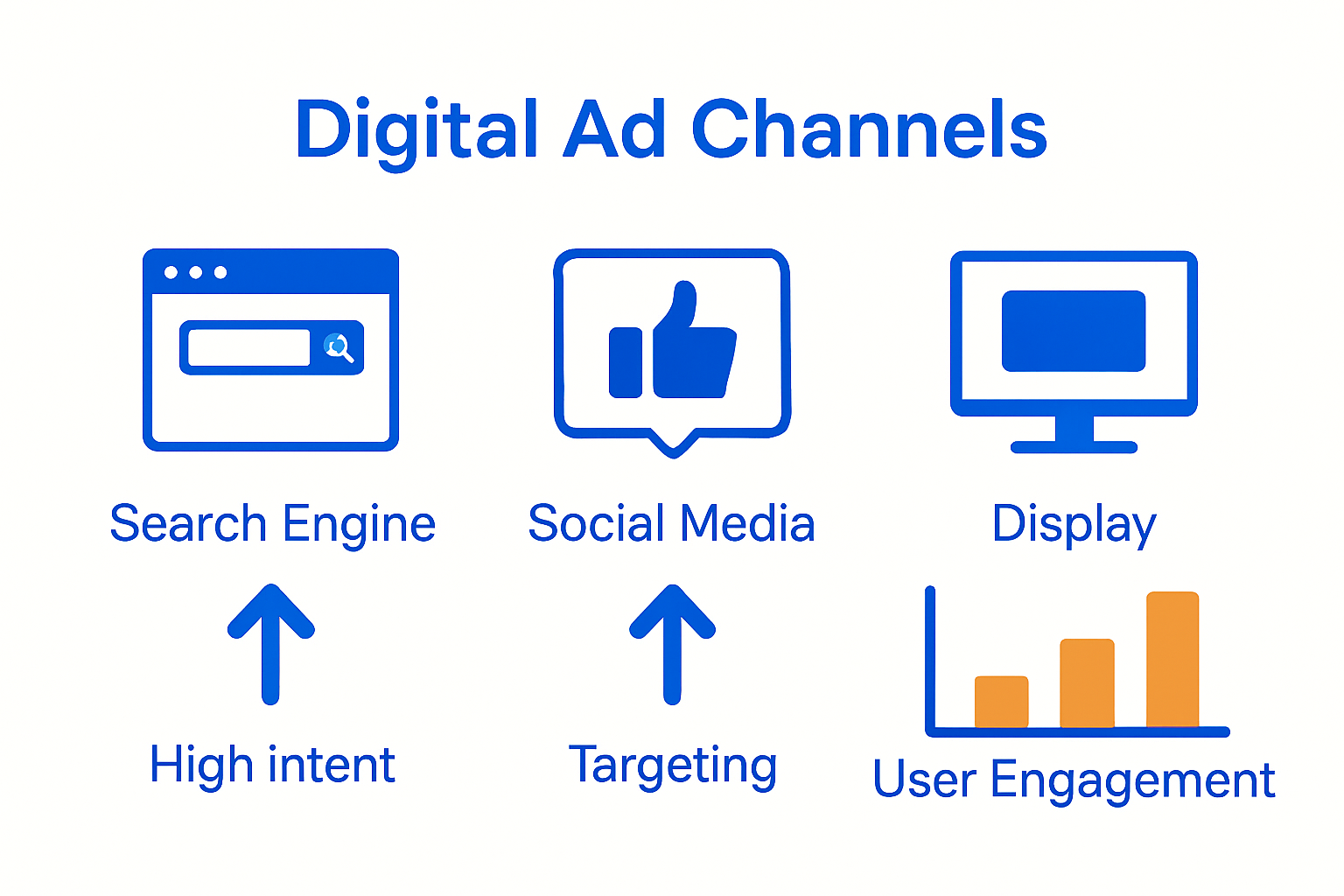
Digital advertising encompasses a diverse array of channels that enable businesses to reach potential customers across multiple online platforms. GeeksforGeeks outlines several critical digital advertising channels that modern businesses can leverage to expand their marketing reach and engagement.
Search Engine Advertising represents one of the most targeted digital marketing approaches. These ads appear directly within search engine results, allowing businesses to connect with users actively seeking specific products or services. Typically, these include text-based sponsored listings that appear above or alongside organic search results, enabling precise audience targeting based on search intent and keywords.
Key digital advertising channels include:
- Search Engine Advertising: Targeted ads appearing in search engine results
- Social Media Advertising: Sponsored content on platforms like Facebook, Instagram, LinkedIn, and Twitter
- Display Advertising: Visual banner and graphic ads across websites and digital networks
- Video Advertising: Promotional videos on platforms like YouTube, streaming services, and social media
- Email Marketing: Targeted promotional messages sent directly to subscriber inboxes
- Native Advertising: Sponsored content that matches the look and feel of surrounding editorial content
Russian Law Journal emphasizes that selecting the appropriate digital advertising channel depends critically on understanding your specific marketing objectives and target audience characteristics. For instance, B2B companies might find LinkedIn advertising more effective, while consumer product brands could see better results through Instagram or YouTube campaigns.
The versatility of these channels allows businesses to create integrated, multi-platform marketing strategies that maximize visibility and engagement. Successful digital advertising requires not just selecting the right channels, but also crafting compelling, targeted content that resonates with specific audience segments across these diverse platforms.
How Digital Ad Targeting Works Today
Digital ad targeting represents a sophisticated technological ecosystem that enables businesses to deliver precisely tailored advertising messages to specific audience segments. According to Coursera, modern digital advertising relies on complex data management platforms (DMPs) and demand-side platforms (DSPs) that transform raw user data into actionable targeting strategies.
The targeting process involves multiple sophisticated mechanisms that analyze user behavior, demographics, and online interactions. Tracking technologies like cookies, pixels, and advanced algorithms collect and process user data across multiple digital touchpoints. Open University highlights the critical importance of understanding the ethical considerations surrounding data collection, emphasizing that responsible targeting balances personalization with user privacy.
Key targeting strategies include:
- Demographic Targeting: Segmenting audiences by age, gender, income, education
- Behavioral Targeting: Analyzing user browsing history, purchase patterns, and online interactions
- Contextual Targeting: Displaying ads based on website content and user’s current browsing context
- Geographical Targeting: Delivering ads specific to user’s location or region
- Retargeting: Showing ads to users who have previously interacted with a brand’s website or content
The real magic of digital ad targeting lies in its ability to create hyper-personalized advertising experiences.
By leveraging advanced machine learning and real-time bidding technologies, advertisers can now deliver messages that feel almost custom-designed for individual users, dramatically improving engagement and conversion rates. For businesses, this means moving beyond traditional broad-based advertising to create laser-focused campaigns that speak directly to specific audience needs and interests.

Maximizing ROI With Campaign Optimization
Campaign optimization represents the strategic process of continuously refining digital advertising efforts to maximize return on investment. Coursera highlights the critical importance of implementing systematic approaches to analyze and improve marketing performance through sophisticated testing and measurement techniques.
The optimization process involves multiple interconnected strategies designed to enhance advertising effectiveness. Key performance indicators serve as the primary diagnostic tools, enabling marketers to track and evaluate campaign performance across multiple dimensions. University of Delaware PCS emphasizes the importance of setting clear objectives and monitoring specific metrics that directly correlate with business goals.
Critical optimization strategies include:
- A/B Testing: Comparing different ad variations to identify most effective messaging and design
- Audience Segmentation: Refining targeting to reach most responsive customer groups
- Bid Strategy Optimization: Adjusting spending to maximize cost-effectiveness
- Conversion Rate Tracking: Monitoring and improving user action rates
- Performance Metric Analysis: Evaluating key indicators like click-through rates, cost per acquisition
Successful campaign optimization requires a data-driven, iterative approach that continuously adapts to changing market conditions and audience behaviors. Businesses must develop agile strategies that leverage real-time analytics, machine learning algorithms, and sophisticated tracking technologies to make precise, informed adjustments. This dynamic process transforms digital advertising from a static marketing expense into a responsive, intelligent system capable of delivering increasingly efficient and targeted results.
Common Mistakes and Industry Best Practices
Navigating the complex digital advertising landscape requires a nuanced understanding of potential pitfalls and strategic best practices. Coursera reveals that many businesses stumble by neglecting critical aspects of audience segmentation and budget allocation, which can dramatically impact campaign performance and overall marketing effectiveness.
Strategic awareness is the foundation of avoiding common digital advertising mistakes. Open University emphasizes the importance of maintaining consistent branding and leveraging comprehensive data analytics to prevent costly errors that can undermine marketing efforts.
Common digital advertising mistakes include:
- Inadequate Audience Targeting: Casting too wide a net instead of focusing on specific, high-value customer segments
- Ignoring Mobile Optimization: Failing to create ads that perform effectively across mobile devices
- Inconsistent Branding: Developing messaging that lacks cohesion across different platforms
- Neglecting Analytics: Not continuously monitoring and adjusting campaign performance
- Budget Misallocation: Spreading resources too thin instead of concentrating on high-performing channels
Industry best practices demand a proactive, data-driven approach that continuously adapts to changing market dynamics. Successful digital advertisers invest in deep audience understanding, develop flexible strategies, and maintain a commitment to ongoing learning and optimization. This approach transforms potential mistakes into opportunities for growth, enabling businesses to create more targeted, effective, and efficient advertising campaigns that deliver meaningful results.
Unlock the Full Potential of Your Digital Advertising Today
If you find yourself overwhelmed by the complexities of digital ad targeting, campaign optimization, or struggling to see a real return on your advertising spend, you are not alone. This guide highlighted the critical need for precise audience targeting, real-time analytics, and strategic campaign refinement — all vital to transforming your ads from costly experiments into powerful growth engines. Businesses often wrestle with common pitfalls like inadequate segmentation, poor budget allocation, and inconsistent messaging. Addressing these challenges requires expert insight and hands-on experience.
At Click Thrive Marketing, we specialize in turning these digital advertising challenges into measurable success. With a proven record managing over $30 million in Google Ads spend, we craft tailored campaigns that elevate customer engagement, boost conversion rates, and maximize your ROI. Whether you want to improve lead generation or refine your campaign performance, explore our Uncategorized Archives – Click Thrive Marketing for insights and solutions designed to help your business thrive.
Take control of your digital advertising and stop wasting budget on poorly targeted campaigns. Visit Click Thrive Marketing now to discover how our customized Google Ads management and data-driven strategies can accelerate your business growth. Don’t wait until your competitors outpace you — begin optimizing your campaigns with us today.
Frequently Asked Questions
What is digital advertising?
Digital advertising refers to online promotional strategies that connect businesses with potential customers through targeted digital channels such as websites, social media, and search engines.
How does digital ad targeting work?
Digital ad targeting utilizes data management platforms and tracking technologies to analyze user behavior and demographics, allowing businesses to deliver tailored advertising messages to specific audience segments.
What are the major types of digital advertising channels?
Key digital advertising channels include search engine advertising, social media advertising, display advertising, video advertising, email marketing, and native advertising.
What are common mistakes to avoid in digital advertising campaigns?
Common mistakes include inadequate audience targeting, ignoring mobile optimization, inconsistent branding, neglecting analytics, and misallocating budgets.
Recommended
- What Is Digital Marketing? Complete Overview for SMBs – Click Thrive Marketing
- The Essential Guide to the Role of Digital Marketing – Click Thrive Marketing
- What Is Online Advertising? Complete Digital Guide – Click Thrive Marketing
- Digital Marketing Terminology Explained: Complete Guide – Click Thrive Marketing
- Post | Tulip Films