
Over ninety percent of American businesses miss out on potential conversions because they fail to fully analyze their website and ad performance. For anyone serious about digital marketing, this gap represents lost revenue and wasted ad budgets. By approaching optimization with a data driven mindset, you equip yourself to uncover hidden trends, address weak points, and shape marketing strategies that achieve results.
Table of Contents
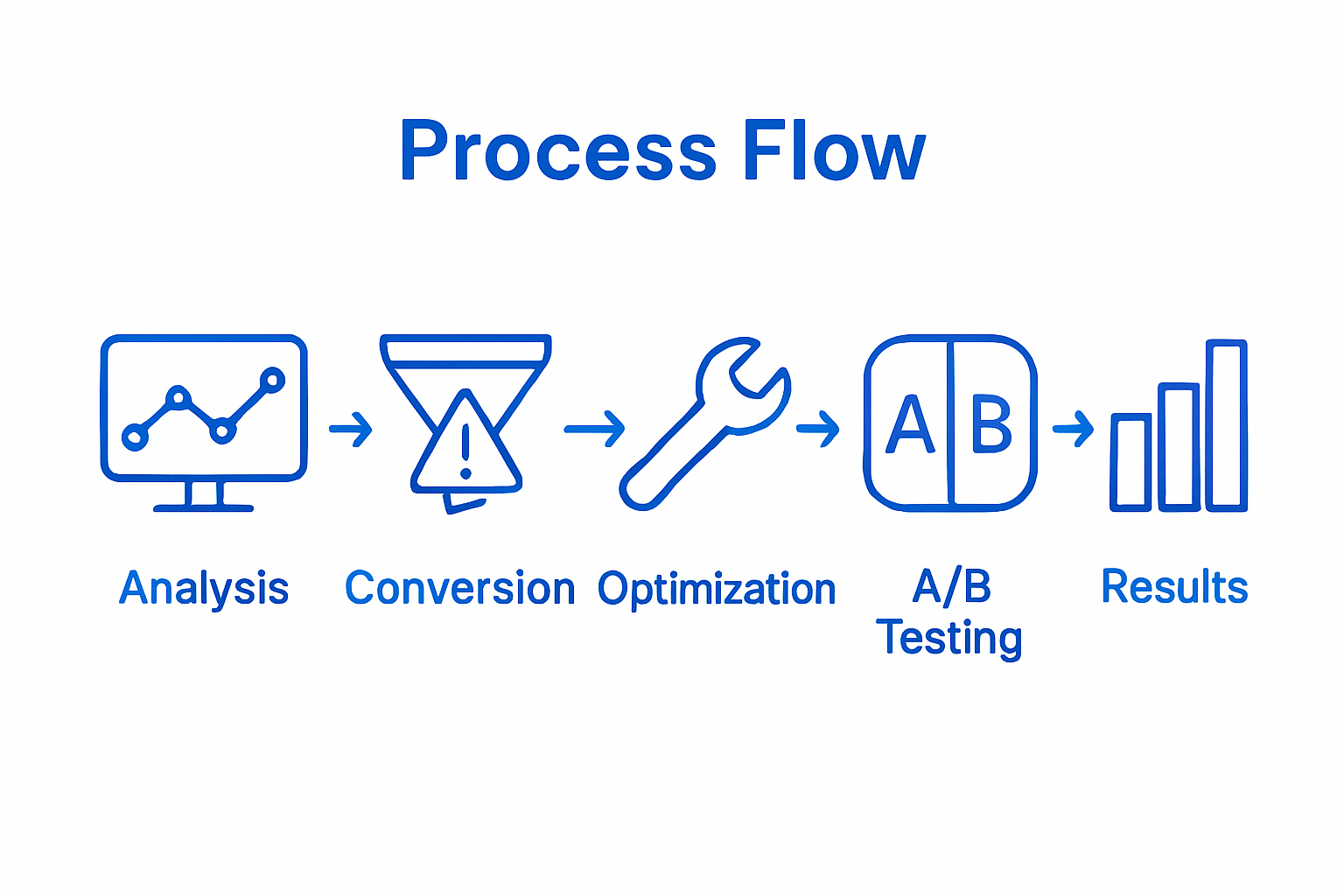
- Step 1: Assess Current Website And Ad Performance
- Step 2: Identify Key Conversion Bottlenecks
- Step 3: Implement Targeted Optimization Strategies
- Step 4: Test Changes With Data-Driven Experiments
- Step 5: Monitor Results And Refine For Growth
Quick Summary
| Key Point | Explanation |
|---|---|
| 1. Assess Current Performance | Gather data from analytics platforms to understand click-through rates, conversion rates, and user engagement to identify improvement opportunities. |
| 2. Identify Conversion Bottlenecks | Analyze your conversion funnel to locate drop-off points and understand barriers to conversion through detailed user flow tracking. |
| 3. Implement Targeted Optimization | Use insights from bottleneck analysis to prioritize specific strategies like landing page improvements and A/B testing for enhanced conversion rates. |
| 4. Conduct Data-Driven Experiments | Utilize A/B testing to validate changes based on clear success metrics, ensuring measurable impacts on performance from each strategy. |
| 5. Monitor and Refine Regularly | Establish a monitoring dashboard to track key performance indicators, and conduct quarterly reviews to adapt strategies based on evolving user behaviors. |
Step 1: Assess current website and ad performance
Optimizing conversion rates starts with understanding your current digital marketing landscape. Web analytics play a crucial role in measuring performance across your website and advertising channels. By systematically evaluating key metrics, you will uncover opportunities to improve lead generation and overall marketing effectiveness.
To assess your current performance, start by gathering data from multiple sources: website analytics platforms, ad platform dashboards, and conversion tracking tools. Focus on critical metrics like click through rate, conversion rate, bounce rate, and cost per lead. Look for patterns in user behavior such as which pages generate the most engagement, where users drop off in the conversion funnel, and which ad campaigns deliver the highest quality leads. Performance tracking enables marketers to make data driven improvements that directly impact business growth.
One strategic tip is to segment your performance data by traffic source, device type, and audience demographics. This granular approach helps you identify specific segments that perform exceptionally well or need optimization. By understanding these nuanced insights, you can create more targeted marketing strategies that resonate with your ideal customer profile and drive higher conversion rates.
Step 2: Identify key conversion bottlenecks
Identifying conversion bottlenecks is crucial for transforming your digital marketing performance. Data driven approaches help systematically detect constraints that prevent potential customers from completing desired actions on your website or through your advertising campaigns.
Start by analyzing your conversion funnel using detailed user flow tracking. Map out each step customers take from initial ad click to final conversion. Look for specific points where significant user dropoff occurs such as complex form designs, unclear value propositions, slow page load times, or confusing navigation. Conversion rate improvement strategies depend on understanding exactly where and why potential customers abandon their journey.
One strategic approach is conducting comprehensive user experience audits. This involves heat mapping user interactions, reviewing session recordings, and gathering direct user feedback through surveys or usability testing. By combining quantitative data with qualitative insights, you can pinpoint precise friction points that discourage conversions and develop targeted optimization strategies that remove barriers and streamline the user experience.
Step 3: Implement targeted optimization strategies
Machine learning driven optimization approaches offer powerful methods for systematically improving website and ad performance. Your goal is to transform the insights gathered from previous bottleneck analysis into concrete, actionable improvements that directly enhance conversion rates.

Begin by prioritizing optimization strategies based on potential impact and ease of implementation. Focus on critical areas such as landing page design, ad copy refinement, form simplification, and targeting precision. Ad targeting techniques can help you create more personalized experiences that resonate with specific audience segments. Implement A/B testing for each optimization to measure its effectiveness quantitatively, allowing you to make data driven decisions about which changes genuinely improve user conversion rates.
A strategic approach involves creating dynamic content variations that adapt to user behavior. This means developing multiple versions of landing pages, ad copy, and call to action elements that can be automatically served based on user demographics, previous interactions, and predicted preferences. By continuously iterating and refining your optimization strategies, you create a responsive marketing ecosystem that learns and improves in real time.
Step 4: Test changes with data-driven experiments
Online advertising experiments reveal critical insights into how small modifications can significantly impact conversion performance. Your goal in this stage is to systematically validate the optimization strategies you have developed through rigorous and methodical testing.
Implement a comprehensive A/B testing framework that allows you to compare different versions of your marketing assets. This involves creating multiple variants of landing pages, ad copy, call to action buttons, and user interface elements. Focus on testing one variable at a time to ensure clear attribution of performance changes. Why update ad campaigns becomes crucial when you can demonstrate tangible improvements through controlled experimental approaches. Ensure your test sample sizes are statistically significant and run experiments long enough to capture meaningful data across different user segments and time periods.
A strategic tip is to establish clear success metrics before launching any experiment. Define exactly what constitutes a meaningful improvement whether it is reduced bounce rates, increased conversion percentages, or lower customer acquisition costs. By setting precise benchmarks upfront, you create a structured approach to evaluating experimental results that removes subjective interpretation and grounds your optimization efforts in quantifiable evidence.
Step 5: Monitor results and refine for growth
Online ad ecosystem tracking reveals continuous evolution requires a proactive approach to monitoring and refining your marketing performance. Your ultimate goal is to create a dynamic system that adapts and improves based on real time data and emerging user behavior patterns.
Establish a comprehensive monitoring dashboard that tracks key performance indicators across all marketing channels. Pay close attention to metrics such as conversion rates, cost per acquisition, click through rates, and user engagement levels. Look for both micro trends and broader patterns that indicate potential optimization opportunities. Performance marketing processes become powerful when you can translate data insights into actionable strategic adjustments that incrementally improve your marketing effectiveness.
A strategic recommendation is to implement a quarterly review process where you conduct a holistic analysis of your marketing performance. This involves not just examining raw numbers but understanding the underlying user experience and potential barriers to conversion. By maintaining a continuous improvement mindset and being willing to make data driven pivots, you create a resilient marketing strategy that can adapt to changing market conditions and user preferences.
Unlock Higher Lead Generation with Expert Conversion Optimization
Struggling to identify the key bottlenecks that hold back your website from converting visitors into valuable leads The article highlights the importance of data-driven assessment and targeted strategies to optimize conversion rates. If your goal is to remove friction points, refine ad targeting, and continuously improve user experience Click Thrive Marketing specializes in these exact challenges. Our proven methods for Google Ads management and lead generation turn complex analytics into actionable improvements that boost your marketing ROI.
Ready to master your conversion rate optimization workflow and elevate your lead generation? Visit our Uncategorized Archives to explore relevant insights or head straight to our main site for tailored solutions. Don’t let potential customers slip away Optimize your campaigns now with Click Thrive Marketing and experience measurable growth through strategic, performance-driven digital marketing.
Frequently Asked Questions
How can I assess my current website and ad performance for conversion rate optimization?
To assess your website and ad performance, gather data from analytics platforms and ad dashboards. Focus on key metrics like click through rate, conversion rate, and cost per lead. Review these elements regularly to identify opportunities for improvement.
What steps can I take to identify key conversion bottlenecks on my website?
To identify conversion bottlenecks, analyze your conversion funnel and track user behavior through the entire process. Look for specific points where users drop off and conduct user experience audits to gather feedback. This will help you pinpoint issues that prevent successful conversions.
What are some targeted optimization strategies I can implement to improve conversion rates?
Implement optimization strategies by prioritizing high-impact areas like landing page design and ad copy. Use A/B testing to measure the effectiveness of changes and adjust your approaches based on user behavior. Aim to make actionable changes that enhance user engagement within a few weeks.
How do I test changes systematically with A/B experiments?
To conduct A/B tests, create multiple versions of your landing pages or ad copy and test one variable at a time. Ensure your sample sizes are statistically significant and define clear success metrics before launching to measure performance accurately. This allows you to make informed decisions about which changes are effective.
How can I monitor results and continually refine my conversion optimization efforts?
Establish a monitoring dashboard to track key performance indicators across your marketing channels. Regularly review these indicators and look for emerging trends that indicate areas for improvement. Implement a quarterly review process to evaluate your strategies and make data-driven adjustments accordingly.
Recommended
- What Is Conversion Rate? Complete Guide for Marketers – Click Thrive Marketing
- Conversion Rate Improvement Process for Higher Online ROI – Click Thrive Marketing
- How to Generate Leads for Small Businesses Online – Click Thrive Marketing
- Why Use Lead Generation: Complete Guide for SMBs – Click Thrive Marketing
- Top 10 Marketing Problems For PT, HIT & Strength Studios
- Read – 15 Strategies for Customer Retention That Work in Australia. SLY Collective Underwear
19 Responses