
Over 60 percent of american businesses report that outdated ad campaigns lead to wasted budgets and missed growth opportunities. In a rapidly shifting digital world, even a small lapse in your advertising strategy can put your brand behind faster-moving competitors. Smart updates keep your message sharp, your audience engaged, and your investment working harder. This guide shows how regular campaign updates can help any american business stay relevant and maximize every dollar spent.
Table of Contents
- Why Updating Ad Campaigns Matters
- Common Types of Ad Campaign Updates
- Key Benefits of Regular Optimization
- Risks of Running Outdated Campaigns
- Expert Strategies for Effective Updates
Key Takeaways
| Point | Details |
|---|---|
| Importance of Regular Updates | Constantly updating ad campaigns keeps messaging relevant and optimizes return on investment. |
| Agility in Advertising | Leveraging advanced analytics enables businesses to adapt quickly to market changes and optimize campaign performance. |
| Risks of Outdated Campaigns | Running outdated campaigns can lead to decreased engagement, higher costs, and lost opportunities in a competitive landscape. |
| Strategic Improvement Techniques | Utilizing data-driven strategies and tools enhances campaign management efficiency and responsiveness. |
Why Updating Ad Campaigns Matters
Staying competitive in digital advertising requires constant refinement and strategic adaptation of your ad campaigns. Businesses that track ad performance understand that static campaigns quickly become ineffective in a rapidly changing market landscape. Regular updates ensure your messaging remains relevant, targeting remains precise, and return on investment stays optimized.
Modern digital advertising demands agility. By leveraging precise ad targeting, businesses can dramatically improve campaign performance through intelligent adjustments. Research indicates that utilizing advanced analytics allows companies to analyze user behavior, identify emerging patterns, and automatically recalibrate campaigns – ultimately reducing wasted ad spend and improving overall marketing efficiency.
The benefits of consistent campaign updates extend beyond immediate performance metrics. During periods of market uncertainty, maintaining and strategically updating advertising efforts can help businesses maintain market share and consumer mindshare. Adaptive campaigns communicate brand resilience, demonstrate market awareness, and keep your organization connected with potential customers even when economic conditions fluctuate. Smart marketers view campaign updates not as optional maintenance, but as a critical strategic imperative for sustained business growth.
Key reasons to update ad campaigns include:
- Realigning messaging with current market trends
- Responding to shifts in customer preferences
- Improving audience targeting precision
- Reducing inefficient ad spending
- Maintaining competitive positioning
- Exploring emerging marketing channels and strategies
Common Types of Ad Campaign Updates
Advertisers have multiple strategic approaches for updating ad campaigns, each designed to optimize performance and relevance. Campaign management tools enable marketers to implement sophisticated updates that can dramatically improve targeting and engagement. These updates range from subtle adjustments to comprehensive restructuring, depending on performance data and market dynamics.
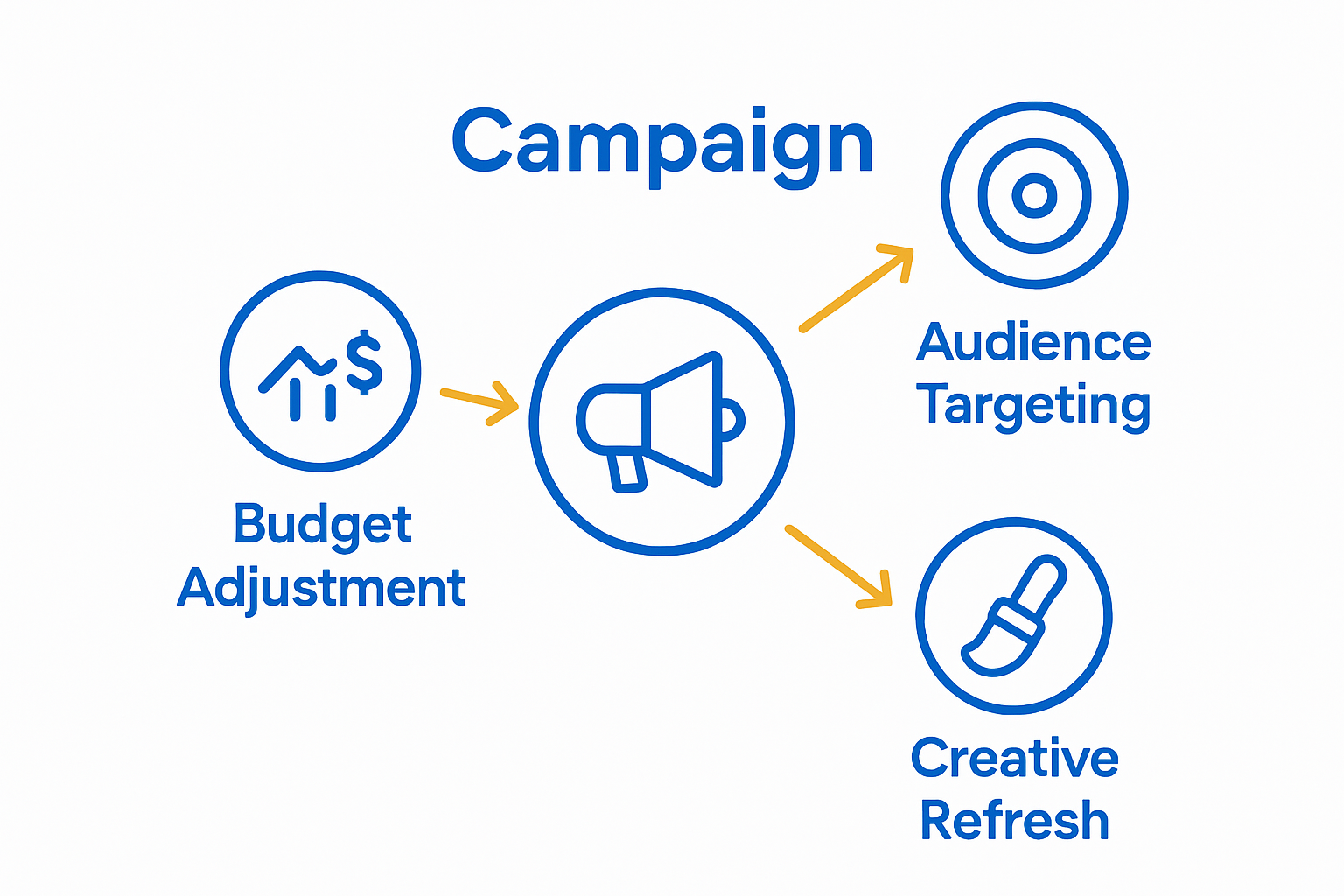
According to research, ad campaign updates can encompass a wide range of modifications. These include adjusting budget allocations, refining targeting parameters, pausing underperforming segments, updating ad group structures, and modifying campaign end dates. The goal is to create more responsive and intelligent advertising strategies that adapt quickly to changing consumer behaviors and market conditions.
Modern digital advertising demands a dynamic approach to campaign management. Interactive ad formats have emerged as a powerful tool for keeping campaigns fresh and engaging. These formats, such as carousel ads and rich media advertisements, incorporate interactive elements like video, audio, and animations that capture user attention more effectively. By regularly updating ad creative and exploring innovative presentation methods, businesses can maintain audience interest and improve overall campaign performance.
Key types of ad campaign updates include:
- Budget reallocation and optimization
- Targeting parameter refinements
- Ad creative redesign
- Audience segment adjustments
- Performance-based campaign restructuring
- Exploration of new ad formats and interactive elements
- Pausing or removing underperforming ad sets
- Implementing advanced tracking and analytics
Key Benefits of Regular Optimization
Advertisers who prioritize conversion rate optimization understand that continuous campaign refinement is more than a tactical choice – it’s a strategic imperative. Regular optimization transforms digital advertising from a static process into a dynamic, responsive system that adapts to changing market conditions and consumer behaviors.
Research demonstrates that tailored advertising strategies can dramatically improve marketing effectiveness. Targeted ad optimization leads to higher engagement rates by precisely aligning advertisements with consumers’ specific interests and preferences. Businesses implementing dynamic optimization techniques have seen remarkable results, with some retailers experiencing up to a 28% increase in sales through carefully adjusted advertising approaches that respond to real-time user interactions.

The benefits of consistent ad campaign optimization extend far beyond immediate performance metrics. By continuously refining targeting parameters, creative elements, and audience segmentation, businesses can significantly reduce media waste, improve return on investment, and create more meaningful connections with potential customers. Strategic optimization allows marketers to develop increasingly sophisticated understanding of their audience, transforming raw advertising spend into a precision instrument for business growth.
Key benefits of regular ad campaign optimization include:
- Reduced advertising waste
- Enhanced audience targeting precision
- Improved conversion rates
- More efficient budget allocation
- Better understanding of customer behavior
- Increased sales and revenue potential
- Faster adaptation to market changes
- Higher return on advertising investment
Risks of Running Outdated Campaigns
Outdated advertising campaigns represent a significant strategic liability for businesses seeking to maintain competitive edge in digital marketing. Google Ads best practices emphasize the critical importance of keeping campaigns current and responsive to changing market dynamics. Stagnant advertising approaches can rapidly erode marketing effectiveness, leading to diminished returns and missed opportunities.
Campaign performance degradation occurs when advertisements fail to align with evolving consumer preferences and technological capabilities. As digital platforms continuously update their targeting algorithms and user experience, static campaigns become increasingly inefficient. Businesses that neglect regular campaign updates risk experiencing dramatically reduced engagement rates, higher cost per acquisition, and progressively lower conversion potential.
The financial implications of running outdated campaigns extend beyond immediate performance metrics. Unchanged advertising strategies can create significant opportunity costs, where marketing budgets are essentially wasted on approaches that no longer resonate with target audiences. Modern digital advertising requires constant refinement, with marketers needing to adapt quickly to shifts in consumer behavior, emerging technologies, and competitive landscapes.
Key risks of maintaining outdated ad campaigns include:
- Progressively declining click-through rates
- Increased advertising costs
- Reduced audience relevance
- Lower conversion rates
- Missed market opportunities
- Decreased brand perception
- Inefficient budget allocation
- Falling behind more adaptive competitors
Expert Strategies for Effective Updates
Professional marketers understand that strategic ad campaign updates require a systematic and data-driven approach. Conversion rate optimization techniques provide the foundation for implementing meaningful campaign improvements that drive tangible business results.
Experts recommend leveraging advanced tools like Google Ads Editor for comprehensive campaign management, enabling marketers to execute bulk edits and implement sophisticated optimization strategies. Performance Max campaigns represent a cutting-edge approach to automated optimization, allowing precise control over audience signals, asset groups, and conversion goals. By utilizing these sophisticated platforms, businesses can develop more responsive and intelligent advertising ecosystems that adapt quickly to changing market dynamics.
Consistent monitoring and strategic adaptation are critical components of successful campaign management. Professionals emphasize maintaining a continuous advertising presence rather than implementing sporadic or reactive updates. This approach ensures sustained brand visibility, builds long-term audience trust, and allows for incremental refinements that compound marketing effectiveness over time. Successful marketers treat campaign updates as an ongoing process of strategic refinement, not a one-time event.
Key expert strategies for effective ad campaign updates include:
- Utilize bulk editing tools for efficient management
- Implement Performance Max campaign techniques
- Develop granular audience targeting signals
- Maintain consistent advertising presence
- Conduct regular performance audits
- Create adaptable asset groups
- Monitor conversion goal achievements
- Embrace data-driven optimization approaches
Take Control of Your Ad Campaign Success with Expert Guidance
The article highlights a growing challenge many businesses face today: keeping ad campaigns fresh, targeted, and optimized to avoid wasted ad spend and declining performance. If you find yourself struggling with realigning messaging to market shifts or reducing advertising inefficiencies, you are not alone. Concepts like campaign restructuring, audience targeting precision, and conversion rate optimization are essential but can become overwhelming without expert support.
At Click Thrive Marketing, we specialize in turning these challenges into growth opportunities for small to medium-sized businesses. Our award-winning team manages over $30 million in Google Ads spend, helping businesses maximize ROI, boost lead generation, and stay ahead in a competitive digital landscape. We leverage cutting-edge tools and strategic updates such as Performance Max campaigns and dynamic audience targeting to keep your ads relevant and powerful.
Ready to transform your advertising approach and see measurable results? Explore insights and services in our Uncategorized Archives for practical tips and proven methods.
Don’t let outdated ad campaigns limit your business growth. Visit Click Thrive Marketing now to discover how our tailored Google Ads management and campaign optimization strategies can revitalize your advertising efforts and unlock new potential. Act today to secure your competitive advantage and drive better conversions.
Frequently Asked Questions
Why is it important to update ad campaigns regularly?
Updating ad campaigns regularly is crucial for staying competitive and relevant in the fast-paced digital advertising landscape. Regular updates ensure that messaging aligns with current market trends, improves audience targeting precision, and reduces inefficient ad spending.
What are some common types of updates for ad campaigns?
Common types of ad campaign updates include budget reallocation and optimization, refining targeting parameters, redesigning ad creative, adjusting audience segments, restructuring campaigns based on performance, and exploring new ad formats.
How can regular optimization benefit my ad campaigns?
Regular optimization can significantly reduce advertising waste, enhance audience targeting precision, improve conversion rates, and allocate budgets more efficiently. It also allows businesses to quickly adapt to market changes and understand customer behavior better.
What are the risks of running outdated ad campaigns?
Running outdated ad campaigns can lead to declining click-through rates, increased advertising costs, reduced audience relevance, and missed market opportunities. Additionally, outdated strategies can result in decreased brand perception and inefficient budget allocation.
25 Responses