
Most american businesses jump into digital marketing without a clear plan, yet over 60 percent of marketers say their campaigns fall short because they skipped key strategy steps. In today’s crowded online space, defining specific goals and pinpointing your target audience makes the difference between wasted effort and real results. This guide breaks down proven steps that help american brands clarify objectives, reach the right customers, and turn data insights into continuous growth.
Table of Contents
- Step 1: Define Your Business Goals And Target Audience
- Step 2: Select Effective Digital Marketing Channels
- Step 3: Set Up And Optimize Ad Campaigns
- Step 4: Track Results And Analyze Performance
- Step 5: Adjust Strategies For Continuous Growth
Quick Summary
| Key Insight | Explanation |
|---|---|
| 1. Define specific business goals | Establish clear, measurable objectives aligned with your overall vision for focused marketing efforts. |
| 2. Understand your target audience deeply | Create detailed buyer personas using demographic and psychographic data to tailor your marketing strategy effectively. |
| 3. Choose the right marketing channels | Select a few effective channels that match your goals and where your audience spends time, rather than trying to use every option available. |
| 4. Continuously optimize ad campaigns | Implement data-driven adjustments based on performance metrics to improve engagement and conversion rates with your ads. |
| 5. Regularly analyze and adapt strategies | Conduct monthly reviews to assess performance and be ready to pivot your strategies based on emerging trends and insights. |
Step 1: Define your business goals and target audience
Successful digital marketing begins with crystal clear objectives and an intimate understanding of who you want to reach. Your goals are the strategic compass that will guide every marketing decision, ensuring your efforts are focused and purposeful.
Starting with goals means getting specific about what success looks like for your business. Research from marketing experts emphasizes establishing measurable objectives that align with your broader business vision. These goals might range from increasing website traffic by 50% to generating 100 qualified leads per month. The key is making them concrete and trackable. Ad targeting strategies can help refine these objectives, allowing you to create precise, outcome-driven marketing plans.
Building a detailed target audience profile requires deep research and strategic thinking. Use demographic data, psychographic information, and behavioral insights to create a comprehensive buyer persona. This isn’t about guessing who might want your product it’s about understanding exactly who your ideal customer is their challenges, motivations, and digital behaviors. By mapping out these specifics, you transform generic marketing into laser-focused communication that resonates directly with the right people.
Quick tip: Always validate your goals and audience assumptions through actual data. Surveys, analytics, and customer interviews can provide invaluable real-world insights that refine your strategy.
Step 2: Select effective digital marketing channels
Selecting the right digital marketing channels is critical for reaching your target audience and achieving your business objectives. Your strategy should align closely with the specific characteristics and preferences of your potential customers.

Digital marketing channels like search engine marketing, social media, email, and content marketing each offer unique advantages for connecting with your audience. Search engine optimization provides long term organic visibility, while paid search ads can deliver immediate targeted traffic. Social media platforms enable direct engagement and brand storytelling, and email marketing remains a powerful tool for nurturing customer relationships. The key is not using every channel available, but strategically selecting those that best match your business goals and where your target audience actually spends their time.
Performance marketing strategies help you evaluate and optimize channel performance by tracking specific metrics like conversion rates, cost per acquisition, and return on ad spend. This data driven approach allows you to continuously refine your channel mix, shifting resources toward the most effective platforms. Always start with a focused approach testing 2 3 channels thoroughly rather than spreading your budget too thin across multiple platforms.
Quick tip: Conduct a competitive analysis to understand which channels your most successful competitors are using. This can provide valuable insights into effective strategies within your specific industry.
Step 3: Set up and optimize ad campaigns
Creating successful ad campaigns requires strategic planning, precise targeting, and continuous optimization. Your goal is to develop campaigns that not only capture attention but also drive meaningful results for your business.
Digital channel strategies demand careful consideration of multiple elements when setting up ad campaigns. Start by selecting the right platform that aligns with your target audience characteristics. Google Ads, Facebook Ads, and LinkedIn Ads offer unique targeting capabilities that allow you to narrow your reach to specific demographics, interests, and behaviors. When crafting your ads, focus on creating compelling headlines, clear value propositions, and visuals that immediately grab potential customers attention. Your ad copy should speak directly to the pain points and desires of your ideal customer, using language that resonates and motivates action.
Media planning principles emphasize the importance of tracking key performance metrics to continuously refine your campaigns. Monitor critical indicators like click through rates, conversion rates, cost per click, and return on ad spend. This data driven approach allows you to make informed adjustments, reallocating budget to high performing ads and pausing or modifying underperforming ones. A/B testing different ad variations can provide insights into what messaging and creative elements drive the best results.
Quick tip: Always set a conservative initial budget and gradually increase spending as you identify winning ad combinations. This approach minimizes financial risk while allowing you to gather valuable performance data.
Step 4: Track results and analyze performance
Measuring your digital marketing performance is the critical final step that transforms data into actionable insights. Your ability to understand and interpret campaign metrics will determine how effectively you can optimize future marketing efforts.
Key performance indicators provide a comprehensive view of your marketing effectiveness. Focus on metrics like website traffic, bounce rate, conversion rate, session duration, and customer acquisition cost. These indicators reveal not just how many people see your content, but how engaged and interested they are in your offerings. Pay special attention to traffic sources to understand which channels are driving the most valuable visitors. Analyzing these metrics helps you identify strengths in your current strategy and pinpoint areas that need refinement.
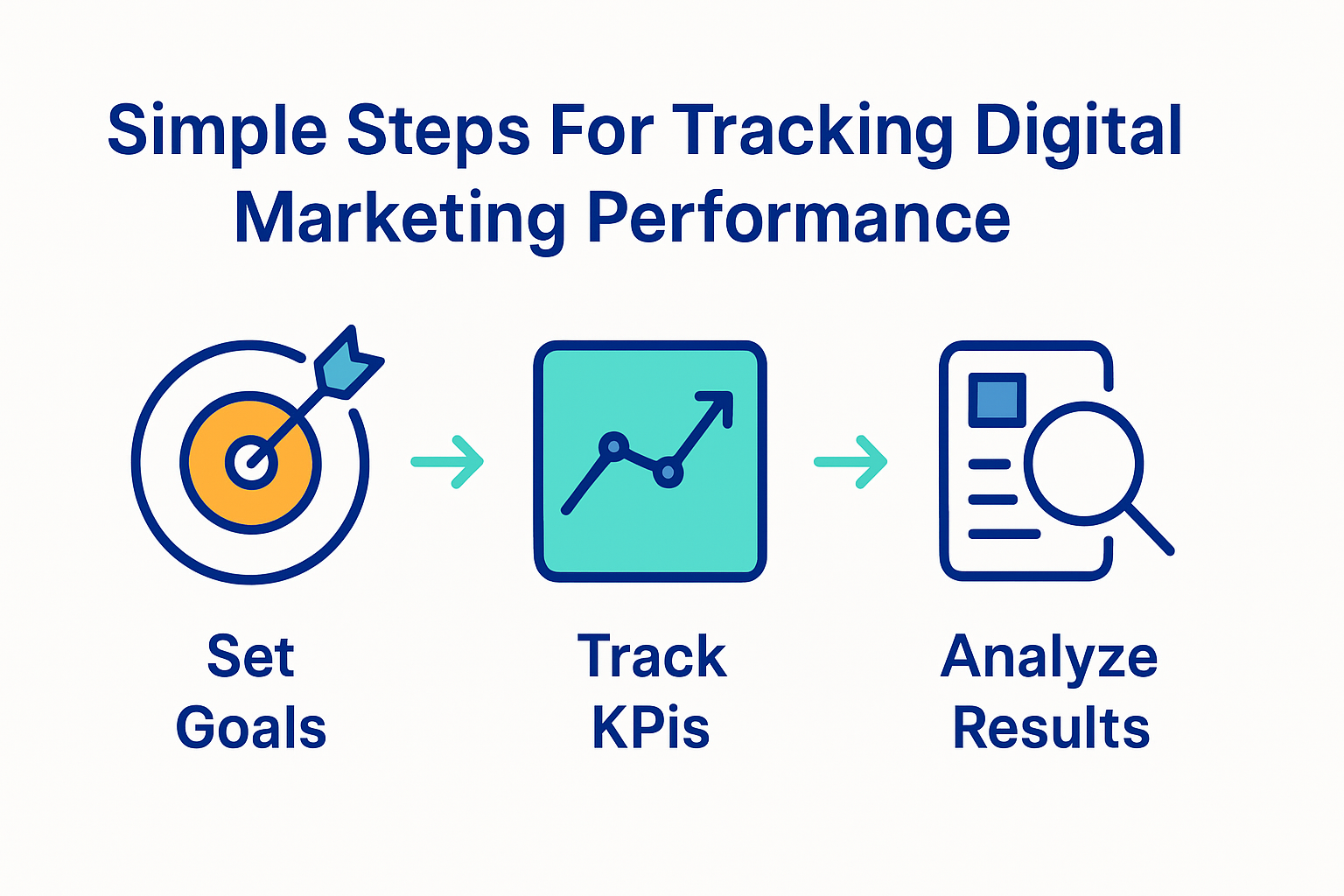
Digital marketing performance tracking requires establishing clear goals and matching them with specific KPIs. Create a dashboard that consolidates data from different platforms like Google Analytics, social media insights, and ad platform metrics. Look for patterns and correlations that reveal deeper insights about your audience behavior. Are certain demographics responding better to specific ad types? Which content generates the most engagement? Regularly reviewing these insights allows you to make data driven adjustments that continuously improve your marketing performance.
Quick tip: Schedule monthly performance reviews to ensure you are consistently analyzing and learning from your marketing data. Treat each campaign as a learning opportunity to refine your approach.
Step 5: Adjust strategies for continuous growth
Growing your digital marketing efforts requires a dynamic approach that embraces change and learns from ongoing performance insights. Successful businesses understand that marketing is not a static process but a continuous journey of refinement and adaptation.
Emerging digital marketing channels demand flexibility and a willingness to experiment with innovative strategies. Stay informed about new technologies and platforms that could expand your reach. This might involve exploring interactive video content, shoppable social media features, or AI driven personalization techniques. Regularly audit your current marketing mix and be prepared to reallocate resources toward channels and tactics that demonstrate the strongest performance and alignment with your business objectives.
Business growth strategies require a proactive approach to strategy adjustment. Create a quarterly review process where you systematically evaluate your marketing performance against established goals. Look for emerging trends in customer behavior, technological advancements, and shifts in your competitive landscape. Develop a culture of continuous learning within your marketing team, encouraging experimentation and rapid iteration. This adaptive mindset allows you to quickly pivot when certain strategies underperform and double down on approaches that generate meaningful results.
Quick tip: Maintain a flexible marketing budget that allows for strategic experiments. Allocate approximately 10 to 15 percent of your resources for testing new channels and innovative approaches.
Accelerate Your Business Growth with Expert Digital Marketing Support
Growing your business through digital marketing can feel overwhelming when juggling goals like targeted ad campaigns and measurable results. This article highlights critical challenges such as defining precise business objectives, selecting effective channels, and continuously optimizing ads to maximize ROI. At Click Thrive Marketing, we understand these pain points and specialize in transforming these complex strategies into streamlined, high-impact campaigns designed to generate quality leads and boost conversions.
Take control of your digital marketing journey today by partnering with a proven agency that has managed over $30 million in Google Ads spend. Visit our Uncategorized Archives – Click Thrive Marketing to explore insights and strategies related to optimizing ad campaigns and growing your business. Ready to turn your digital marketing goals into reality? Discover custom solutions tailored to your needs at Click Thrive Marketing and start expanding your online presence immediately.
Frequently Asked Questions
How do I define my business goals for digital marketing?
To define your business goals, identify specific, measurable objectives that align with your overall vision. For instance, aim to increase website traffic by 50% over the next six months. Clearly outline what success looks like for your business.
What steps should I take to identify my target audience?
To identify your target audience, conduct research using demographic and psychographic data to create detailed buyer personas. Focus on their challenges, motivations, and digital behaviors to ensure your marketing reaches the right people effectively.
Which digital marketing channels should I choose for my campaigns?
Select digital marketing channels that align with your target audience’s preferences and your business goals. For example, if your audience engages more on social media, prioritize that channel for your campaigns to maximize visibility and interaction.
How can I track the performance of my digital marketing efforts?
You can track the performance of your digital marketing by monitoring key performance indicators such as conversion rates and website traffic. Set up a dashboard that combines data from your various platforms, reviewing it regularly to analyze trends and make data-driven adjustments.
What should I include in my ad campaigns to improve results?
In your ad campaigns, include compelling headlines and clear value propositions that speak directly to your target audience’s pain points. Create variations of your ads and A/B test them to determine which messaging and visuals perform best, allowing for continual optimization.
How often should I adjust my digital marketing strategies for growth?
Adjust your digital marketing strategies quarterly to stay aligned with emerging trends and audience behaviors. Regularly evaluate your performance against set goals, allowing you to pivot when necessary and allocate resources to high-performing tactics.
Recommended
- What Is Digital Marketing? Complete Overview for SMBs – Click Thrive Marketing
- Business Growth Strategies Explained: Complete Overview – Click Thrive Marketing
- The Essential Guide to the Role of Digital Marketing – Click Thrive Marketing
- Complete Guide to Why Use Online Advertising – Click Thrive Marketing