
More than 80 percent of american businesses now rely on online advertising to reach new customers and grow their brands. That rapid shift from traditional campaigns to digital strategies matters because it unlocks detailed tracking and powerful audience targeting that old-school ads can’t match. Whether you run a national company or a local shop, online advertising offers tools for measurable results and real-time adjustments so every marketing dollar works harder for your success.
Table of Contents
- Core Definition Of Online Advertising
- Major Types And Channels Explained
- Benefits For Small And Local Businesses
- How Online Advertising Drives Growth
- Common Risks And How To Avoid Them
Key Takeaways
| Point | Details |
|---|---|
| Measurability and Targetability | Online advertising offers precise tracking of audience engagement, allowing marketers to optimize campaigns in real time. This capability outperforms traditional advertising methods significantly. |
| Diverse Advertising Channels | Various online advertising formats, including search engine marketing and social media ads, provide unique targeting options to maximize campaign effectiveness. |
| Benefits for Small Businesses | Digital advertising levels the playing field for small businesses by enabling targeted reach and cost-effective marketing strategies that were previously accessible only to larger firms. |
| Risks and Mitigation | Businesses must address risks related to privacy and data security by implementing transparent data practices and adhering to compliance regulations. |
Core Definition Of Online Advertising
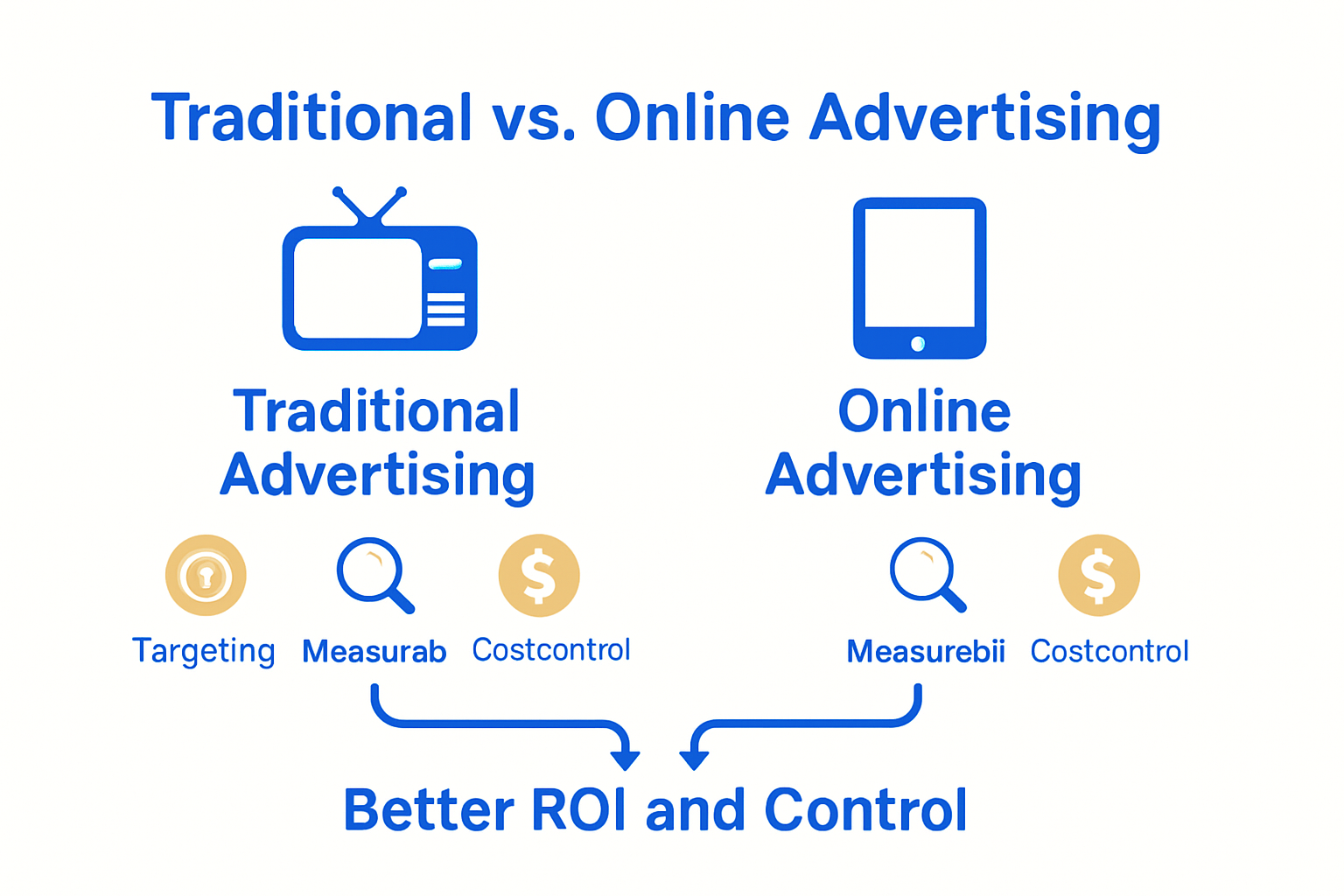
Online advertising represents a strategic digital marketing approach that enables businesses to promote products, services, and brand messages through internet-based channels. According to ScienceDirect, online advertising distinguishes itself from traditional advertising through two critical characteristics: measurability and targetability.
The digital nature of online advertising provides unprecedented advantages for businesses seeking precise audience engagement. Unlike traditional media, online platforms allow marketers to track responses and interactions with advertisements in real time. Marketers can measure engagement metrics like clicks, impressions, conversions, and audience behavior with remarkable precision. As the research indicates, digital channels enable automatic tracking of individual-level data, which means businesses can show different advertisements to different audience segments based on specific demographic, behavioral, and interest-based parameters.
The core components of online advertising typically include display ads, search engine marketing, social media advertising, video ads, and programmatic advertising. Each of these channels offers unique targeting capabilities that traditional advertising methods cannot match.
 Ad Targeting Explained: Maximizing ROI With Precision provides deeper insights into how businesses can leverage these advanced targeting techniques to maximize their marketing investments and reach the most relevant audiences with unprecedented accuracy.
Online advertising works through a complex ecosystem of platforms, networks, and technologies that connect advertisers with potential customers. These systems utilize sophisticated algorithms and data analytics to match advertisements with the most appropriate audience, ensuring that marketing messages are delivered to individuals most likely to be interested in specific products or services. By combining precise targeting, real-time performance tracking, and flexible budget management, online advertising has transformed how businesses approach marketing in the digital age.
Major Types And Channels Explained
Online advertising encompasses a diverse range of digital marketing channels and formats designed to reach potential customers across various platforms. Semrush highlights the complexity of digital advertising, which includes multiple formats such as banner ads, carousel ads, HTML5 animated ads, static ads, in-stream video ads, and promoted accounts.
Jatit identifies Search Engine Marketing (SEM) as a critical digital advertising channel, which involves displaying targeted messages on search engine results pages. SEM enables businesses to drive website clicks by strategically positioning advertisements when users search for specific keyword phrases. This approach allows marketers to capture high-intent audiences actively searching for relevant products or services.
The major digital advertising channels can be categorized into several key types:
- Search Engine Advertising: Text-based ads appearing alongside search results
- Social Media Advertising: Targeted ads on platforms like Facebook, Instagram, LinkedIn
- Display Advertising: Visual banner ads across websites and apps
- Video Advertising: Promotional videos on platforms like YouTube and streaming services
- Native Advertising: Ads designed to match the look and feel of surrounding content
- Programmatic Advertising: Automated ad purchasing using real-time bidding technologies
Each advertising channel offers unique advantages and targeting capabilities. Social media platforms provide granular demographic targeting, search ads capture immediate purchase intent, and display advertising enables broad brand awareness. Successful online advertising strategies typically integrate multiple channels to create comprehensive, multi-touchpoint marketing campaigns that maximize reach and engagement.
Benefits For Small And Local Businesses
EBSCO reveals that online marketing provides small and local businesses with unprecedented opportunities to expand their reach beyond traditional geographic limitations. By leveraging digital channels, these businesses can now compete effectively with larger organizations through strategic web design, digital development, and customer relationship management techniques.
The digital advertising landscape offers small businesses multiple strategic advantages. Unlike traditional marketing methods, online advertising allows for precise budget control, enabling businesses to start with minimal investment and scale their efforts based on performance. JETIR research highlights the revolutionary impact of online advertising, demonstrating its significant influence on consumer buying behavior and purchase decision-making processes.
Key benefits for small and local businesses include:
- Targeted Reach: Pinpoint ideal customers based on demographics, interests, and behaviors
- Cost-Effectiveness: Lower entry costs compared to traditional advertising channels
7 Google Ads Best Practices Every Local Business Needs offers additional insights into maximizing digital advertising strategies. Small businesses can now access advanced marketing tools previously available only to large corporations, leveling the competitive playing field.
The most compelling advantage of online advertising for small businesses is its measurability. Unlike traditional marketing, digital platforms provide real-time analytics, allowing businesses to track every dollar spent, measure campaign performance, and quickly adjust strategies. This data-driven approach ensures that even businesses with limited marketing budgets can achieve meaningful, trackable results and continuously optimize their advertising investments.

How Online Advertising Drives Growth
ScienceDirect reveals that online advertising is a powerful growth engine for businesses, offering unprecedented measurability and targetability compared to traditional marketing channels. The digital nature of online advertising allows businesses to track ad responses in real-time, enabling rapid campaign optimization and precise audience targeting.
Diva-Portal research highlights how digital technologies have transformed advertising by creating interactive communication channels that directly engage consumers. This approach enables businesses to manage large information sources and create personalized marketing experiences that drive meaningful growth.
The growth mechanisms of online advertising include several key strategies:
- Audience Expansion: Reach potential customers beyond traditional geographic limitations
- Performance Tracking: Monitor campaign effectiveness with real-time analytics
- Cost Efficiency: Optimize marketing spend through precise targeting
- Scalable Engagement: Adjust strategies instantly based on consumer interactions
Business Growth Strategies Explained: Complete Overview offers additional insights into leveraging digital marketing for business expansion. Online advertising drives growth by transforming how businesses connect with potential customers, providing unprecedented insights into consumer behavior, preferences, and purchasing patterns. This data-driven approach allows companies to create more intelligent, responsive, and effective marketing strategies that directly contribute to revenue generation and sustainable business development.
Common Risks And How To Avoid Them
ArXiv highlights significant concerns surrounding Online Behavioral Advertising (OBA), particularly around privacy and data monitoring. The research emphasizes the critical need for businesses to understand both advertiser-controlled and consumer-controlled factors that influence advertising perception and response.
ScienceDirect identifies several key risks in online advertising that businesses must proactively manage. These risks include privacy breaches, ad fraud, and potential regulatory compliance challenges. Implementing robust strategies to mitigate these risks is essential for maintaining consumer trust and campaign effectiveness.
Key risks and mitigation strategies include:
- Privacy Concerns: Implement transparent data collection practices
- Ad Fraud: Use verified advertising platforms and monitoring tools
- Compliance Risks: Stay updated with current data protection regulations
- Targeting Accuracy: Develop sophisticated yet ethical targeting approaches
Performance Marketing Process for Maximizing ROI Results provides additional guidance on navigating these challenges. Successful online advertising requires a delicate balance between personalization and privacy, demanding businesses develop sophisticated approaches that respect consumer data while delivering targeted marketing experiences. By prioritizing ethical practices, transparency, and continuous learning, businesses can minimize risks and build long-term trust with their digital audiences.
Unlock the Full Potential of Online Advertising for Your Business
If you are struggling to make sense of online advertising’s measurability and targetability or want to confidently expand your reach beyond traditional limits, you are not alone. Many businesses find it challenging to optimize campaigns that precisely reach the right audience while controlling costs. The article highlights how crucial it is to track every dollar spent, tailor ads by demographics and interests, and respond to real-time data for maximum growth. You need a trusted partner who understands how to navigate these complexities and turn them into measurable results.
At Click Thrive Marketing, we specialize in transforming online advertising challenges into accelerated business growth. Our expertise in Google Ads management and lead generation empowers small to medium-sized businesses to achieve:
- Data-driven campaign optimization that boosts ROI
- Strategic audience targeting that maximizes engagement
- Scalable and cost-effective advertising solutions
Don’t let the complexities of digital marketing hold your business back. Visit our Uncategorized Archives to explore insights and success stories, and get started today at Click Thrive Marketing. Take action now and watch your online advertising efforts deliver the growth you deserve.
Frequently Asked Questions
What is online advertising?
Online advertising is a strategic digital marketing approach that allows businesses to promote their products and services through internet-based channels, utilizing precise targeting and real-time performance tracking.
What are the main types of online advertising?
The major types of online advertising include search engine advertising, social media advertising, display advertising, video advertising, native advertising, and programmatic advertising, each offering unique targeting capabilities.
How can small businesses benefit from online advertising?
Small businesses can benefit from online advertising through targeted reach, cost-effectiveness, budget control, and measurability, allowing them to compete effectively with larger companies without significant investment.
What are the common risks associated with online advertising?
Common risks include privacy concerns, ad fraud, and compliance challenges. Businesses can mitigate these risks by implementing transparent data practices, using verified platforms, and staying updated on data protection regulations.
Recommended
- What Is Online Advertising? Complete Digital Guide – Click Thrive Marketing
- What Is Digital Marketing? Complete Overview for SMBs – Click Thrive Marketing
- Ad Targeting Explained: Maximizing ROI With Precision – Click Thrive Marketing
- 7 Essential Types of Google Ads Every Business Owner Should Know – Click Thrive Marketing
- What Is Yard Sign Advertising? Complete Overview –
- Google Ads for Builders: Complete Strategic Guide – BoxBuild