
Over 60 percent of american businesses rely on digital advertising to attract new customers. With such high stakes, understanding how much each click actually costs can mean the difference between profitable growth and wasted spend. Cost per click is more than just a simple price tag. It shapes every online advertising decision and affects how effectively your marketing dollars work for you. Unlock the key details behind this vital metric and learn how smarter choices can maximize your results.
Table of Contents
- Defining Cost Per Click In Digital Advertising
- Types Of CPC Campaigns And Pricing Models
- How CPC Is Calculated And Tracked
- Factors Influencing CPC Rates And Performance
- Common CPC Mistakes And How To Avoid Them
Key Takeaways
| Point | Details |
|---|---|
| Understanding CPC | Cost per click (CPC) is a pricing model where advertisers pay each time their ad is clicked, enabling budget control and engagement tracking. |
| CPC Campaign Types | CPC campaigns can be flat-rate or bid-based, allowing flexibility for advertisers based on business objectives and market dynamics. |
| Factors Influencing CPC | Key factors affecting CPC rates include industry competition, keyword relevance, and ad quality, all of which must be optimized for better performance. |
| Common CPC Mistakes | Avoiding mistakes such as inadequate keyword research and neglecting ad relevance is crucial for maximizing CPC effectiveness. |
Defining Cost Per Click in Digital Advertising
In the world of digital marketing, cost per click (CPC) represents a fundamental pricing model that determines how advertisers pay for online advertising. According to sk.sagepub.com, CPC is a pricing strategy where advertisers are charged a predetermined fee each time their digital advertisement receives a click.
At its core, CPC enables businesses to control their advertising spend while tracking precise engagement metrics. Marketing.gl explains that this model is particularly prevalent in pay-per-click (PPC) campaigns across platforms like Google Ads and social media advertising channels. By implementing CPC, marketers can:
- Set specific budget limits
- Track exact advertising expenses
- Measure direct user interaction with ads
- Optimize campaign performance in real time
Understanding CPC goes beyond simple financial calculations. It represents a strategic approach to digital advertising where every click carries potential value. Advertisers don’t just pay for visibility – they invest in potential customer interactions. Smart marketers use CPC as a key performance indicator, analyzing not just how many clicks an ad receives, but the quality and conversion potential of those clicks.
To maximize your advertising effectiveness, consider exploring our guide on tracking ad performance to gain deeper insights into measuring and improving your digital marketing strategies.
Types of CPC Campaigns and Pricing Models
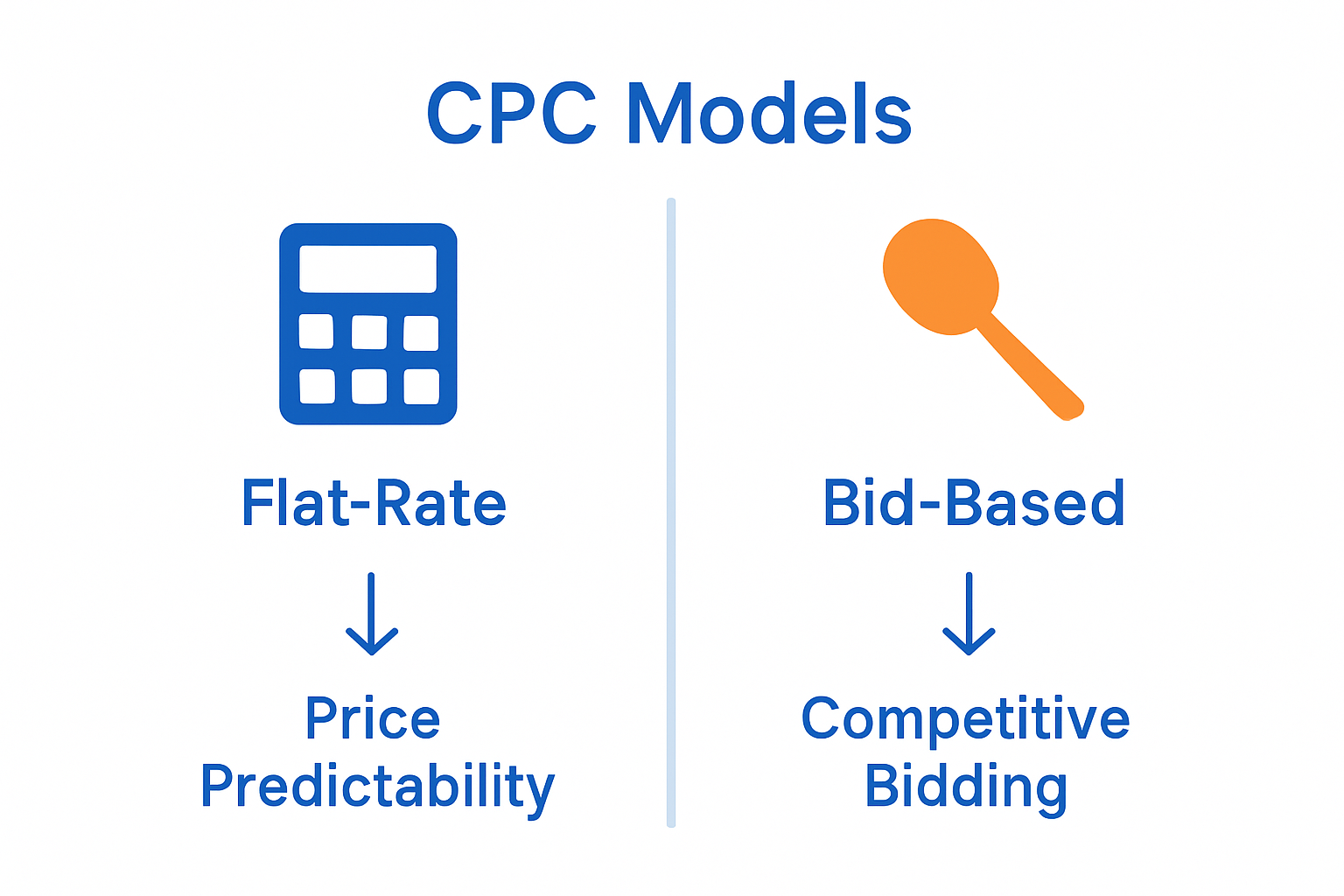
Digital advertising offers multiple pricing models for cost per click campaigns, each with unique strategic advantages. According to Wikipedia, these models primarily fall into two fundamental categories: flat-rate and bid-based systems, which provide advertisers flexible approaches to managing online advertising expenditures.
Digital Vidya further explains the nuanced differences between these pricing strategies. In flat-rate models, advertisers pay a predetermined fee for each click, creating predictable budget scenarios. Bid-based models, conversely, involve more dynamic pricing where advertisers compete in real-time auctions to secure ad placements.
 The actual cost per click is determined by several critical factors:
- Keyword competition
- Ad relevance
- Quality score
- Maximum bid amount
- Target audience characteristics
Successful digital marketers understand that selecting the right CPC campaign type requires careful analysis of business objectives and target market dynamics.
 Some businesses might prefer the consistency of flat-rate models, while others thrive on the competitive potential of bid-based auctions.
To gain deeper insights into crafting effective ad strategies, explore our guide on essential Google Ads types, which can help you navigate the complex landscape of digital advertising pricing models.
How CPC Is Calculated and Tracked
Calculating cost per click (CPC) is a precise process that requires understanding multiple interconnected variables. According to AdQuick, CPC is fundamentally determined by dividing the total advertising expenditure by the number of clicks received, creating a straightforward yet nuanced measurement of advertising efficiency.
The calculation involves several critical components that advertisers must carefully consider. Marketers set a maximum CPC bid, which represents the highest amount they are willing to pay for a single click. However, the actual cost can be significantly lower, influenced by factors such as:
- Ad quality score
- Competitive landscape
- Keyword relevance
- Historical ad performance
- Target audience engagement
Tracking CPC requires sophisticated analytics platforms that provide real-time insights into campaign performance.
Digital marketers must continuously monitor key metrics to optimize their advertising spend, ensuring each click delivers maximum value. This involves analyzing not just the cost per click, but also conversion rates, total campaign expenses, and the overall return on investment.
For more comprehensive strategies in maximizing your digital marketing efforts, check out our guide on performance marketing to gain deeper insights into tracking and optimizing your advertising campaigns.
Factors Influencing CPC Rates and Performance
Navigating the complex landscape of digital advertising requires a deep understanding of the multiple factors that impact cost per click (CPC) rates and overall campaign performance. Successful marketers recognize that CPC is not a static metric but a dynamic calculation influenced by a sophisticated interplay of strategic elements.
The primary drivers of CPC rates can be categorized into several critical domains:
- Industry Vertical: Different sectors experience vastly different competitive landscapes
- Keyword Competitiveness: High-demand keywords dramatically increase advertising costs
- Geographic Targeting: Location-specific markets significantly alter CPC pricing
- Device Type: Mobile, desktop, and tablet platforms have unique engagement costs
- Ad Quality and Relevance: Higher quality scores can reduce overall advertising expenses
Marketing professionals must continuously analyze these interconnected variables to optimize their advertising strategies. The most successful campaigns leverage granular insights, understanding that minor adjustments in targeting, messaging, and audience segmentation can yield substantial improvements in cost efficiency.
To dive deeper into strategic campaign optimization, explore our guide on Google Ads auction mechanics, which provides advanced insights into navigating the complex digital advertising ecosystem.
Common CPC Mistakes and How to Avoid Them
Digital advertising success hinges on avoiding critical strategic pitfalls that can drain marketing budgets and compromise campaign effectiveness. According to Digital Vidya, many advertisers unknowingly sabotage their campaigns through a series of common yet preventable mistakes that significantly impact cost per click performance.
The most prevalent CPC mistakes can be systematically categorized and addressed:
- Inadequate Keyword Research: Failing to understand audience search intent
- Improper Bid Management: Setting static bids without continuous optimization
- Neglecting Ad Relevance: Creating generic ads that don’t speak directly to target audiences
- Ignoring Quality Scores: Overlooking the critical impact of ad and landing page quality
- Poor Conversion Tracking: Not measuring actual campaign performance beyond clicks
AdQuick emphasizes that preventing these errors requires a proactive approach. Successful marketers must develop a dynamic strategy that involves continuous testing, granular audience targeting, and meticulous performance analysis. This means regularly auditing keyword selections, refining ad copy, and aligning landing pages precisely with user expectations.
To gain comprehensive insights into refining your digital advertising approach, take a look at our guide on conversion rate improvement, which offers advanced strategies for maximizing your marketing investments.
Unlock the Full Potential of Your Cost Per Click Campaigns
Understanding cost per click and how it impacts your advertising spend is just the starting point. If you are struggling to control CPC rates while maximizing conversions then you are not alone. Many businesses face challenges like balancing bid management, improving ad quality, and targeting the right audience to truly boost ROI. This article highlights the importance of strategic CPC management as a key to unlocking advertising success.
Ready to turn those clicks into high-quality leads and measurable growth? At Click Thrive Marketing, we specialize in optimizing Google Ads campaigns that focus on reducing unnecessary CPC expenses while increasing customer engagement and conversions. Discover how our proven strategies can elevate your digital advertising by visiting Uncategorized Archives – Click Thrive Marketing and learn actionable tips from industry experts. Take the first step toward smarter online advertising today at https://clickthrivemarketing.com and experience the power of expert Google Ads management designed for your business growth.
Frequently Asked Questions
What is cost per click (CPC) in digital advertising?
CPC is a pricing model where advertisers pay a predetermined fee each time their digital advertisement is clicked. It’s crucial for managing advertising budgets and tracking user engagement.
How is CPC calculated?
CPC is calculated by dividing the total advertising expenditure by the number of clicks received. Advertisers also set a maximum bid, which is the highest amount they are willing to pay for a single click.
What factors influence CPC rates?
CPC rates are influenced by several factors including keyword competitiveness, ad quality and relevance, geographic targeting, device type, and the industry vertical.
How can I optimize my CPC campaigns?
To optimize CPC campaigns, conduct thorough keyword research, manage bids effectively, create relevant ads tailored to your audience, and regularly monitor and analyze your campaign performance.
Recommended
- The Essential Guide to Tracking Ad Performance – Click Thrive Marketing
- Performance Marketing Explained: Key Concepts and Strategies – Click Thrive Marketing
- Why Invest in Google Ads: Complete Expert Guide – Click Thrive Marketing
- What Is Online Advertising? Complete Digital Guide – Click Thrive Marketing