
Every american business owner knows that every advertising dollar counts. With online ads taking over traditional platforms, understanding cost per click can make all the difference in success or wasted spending. In fact, over 40 percent of all clicks happen on just the top three paid spots in search results. This guide explains how mastering cost per click strategies helps american brands turn those clicks into real results.
Table of Contents
- Defining Cost Per Click in Digital Marketing
- Major CPC Variations and Ad Platforms
- How Cost Per Click Works in Google Ads
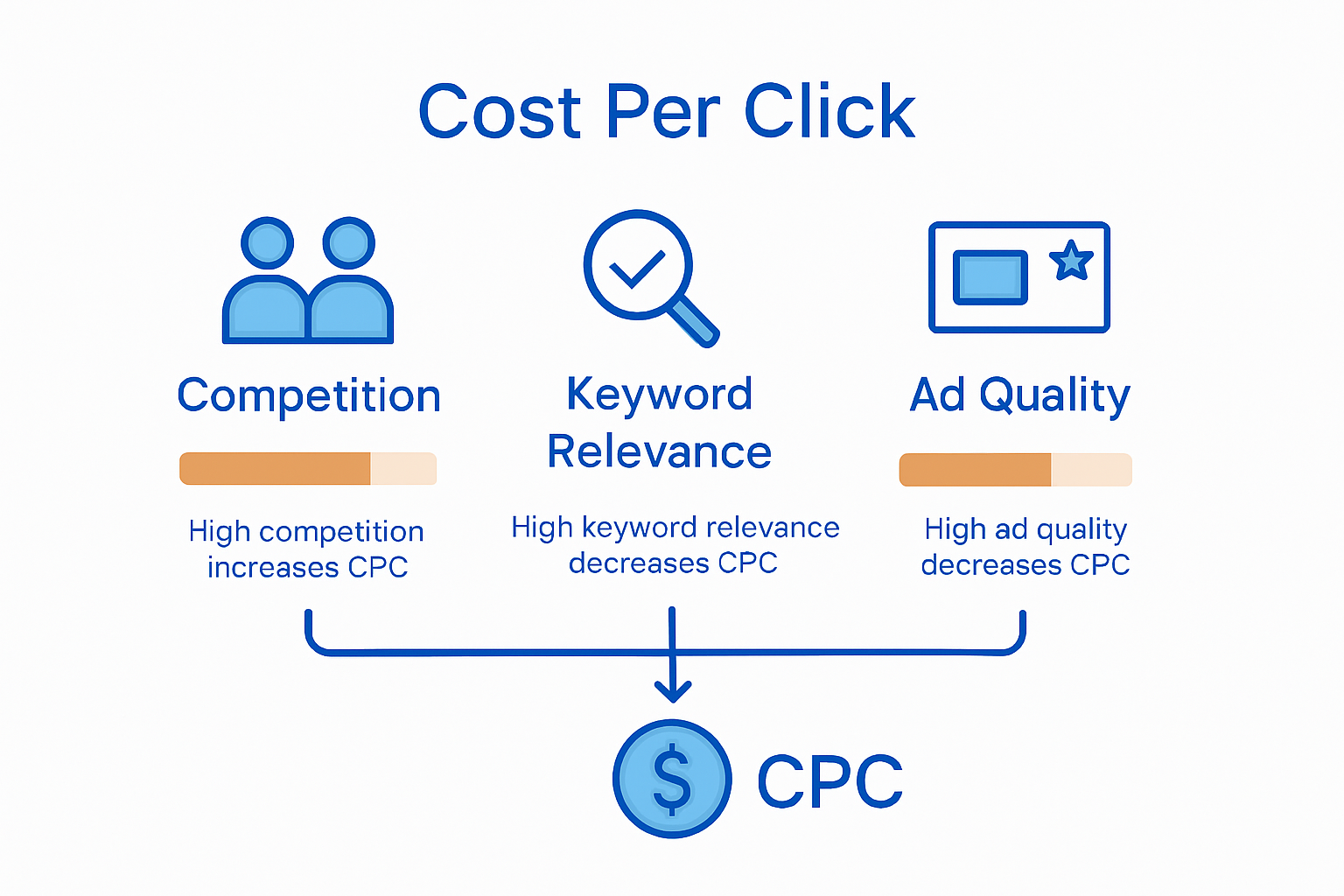
- Key Factors Influencing CPC Pricing
- Best Practices for Lowering Your CPC
Key Takeaways
| Point | Details |
|---|---|
| Understanding CPC | Cost Per Click (CPC) is vital for managing advertising budgets and measuring campaign effectiveness in digital marketing. |
| CPC Variations Across Platforms | Different advertising platforms like Google Ads and Facebook offer unique CPC models that influence overall marketing strategy. |
| Factors Affecting CPC Pricing | Industry competition, keyword relevance, and ad quality significantly impact CPC costs, making it essential for advertisers to monitor these factors. |
| Strategies for Reducing CPC | Improving quality scores, refining keyword selection, and precise audience targeting can help lower CPC and increase ad performance efficiency. |
Defining Cost Per Click in Digital Marketing
In the world of digital advertising, Cost Per Click (CPC) represents a fundamental pricing model that directly impacts how businesses invest in online marketing. According to Marketing, CPC is a metric used to measure the specific cost an advertiser pays each time a user clicks on their digital advertisement, regardless of total impressions.
Understanding CPC requires recognizing its role in pay-per-click (PPC) campaigns across platforms like Google Ads and social media advertising. As Digital Vidya reports, approximately 41% of clicks go to the top three paid advertisements on search engine results pages (SERPs). This statistic highlights the critical nature of strategic CPC management for businesses seeking immediate visibility and traffic generation.
The core mechanics of CPC involve advertisers paying a predetermined amount each time a potential customer clicks their ad. This model offers several strategic advantages:
- Precise budget control
- Measurable performance tracking
- Direct correlation between spend and website traffic
- Ability to optimize campaigns in real time
Successful CPC campaigns typically focus on two primary objectives: generating qualified leads and improving overall digital visibility. By carefully monitoring and adjusting CPC rates, businesses can maximize their advertising efficiency and achieve more targeted results with their digital marketing investments.
For digital marketers and business owners, mastering CPC requires continuous learning and strategic approach. Learn more about tracking ad performance to enhance your understanding of these crucial digital marketing metrics.
Major CPC Variations and Ad Platforms
Digital advertising platforms offer diverse Cost Per Click (CPC) models that enable businesses to strategically allocate their marketing budgets across multiple channels. Marketing highlights that CPC is not a one-size-fits-all metric, but rather a flexible pricing mechanism used across various online advertising ecosystems.
The primary ad platforms with distinctive CPC variations include:
- Google Ads: The most prominent platform, offering search, display, and video ad networks
- Facebook Advertising: Provides granular audience targeting with variable CPC rates
- LinkedIn Ads: Typically higher CPC, targeting professional and B2B markets
- Twitter Advertising: Offers performance-based CPC with real-time engagement tracking
- Instagram Ads: Leverages visual content with mobile-focused CPC strategies
Each platform calculates CPC differently, influenced by factors like audience relevance, ad quality, bidding strategy, and competitive landscape. Some platforms use auction-based pricing, where advertisers compete for ad placement, while others employ more direct pricing models.

Understanding these nuanced CPC variations is crucial for marketers seeking optimal ROI. Learn about Google Ads auction mechanics to gain deeper insights into how digital advertising platforms determine click pricing and ad placement strategies.
How Cost Per Click Works in Google Ads
Google Ads represents a sophisticated advertising ecosystem where cost per click operates through a complex auction-based mechanism. According to Digital Vidya, approximately 41% of clicks are concentrated among the top three paid advertisements on search engine results pages, highlighting the critical importance of understanding CPC dynamics.
The Google Ads CPC model involves several key components that determine ad placement and pricing:
- Ad Rank: Calculated by multiplying maximum bid with quality score
- Quality Score: Measures ad relevance, expected click-through rate, and landing page experience
- Maximum Bid: The highest amount an advertiser is willing to pay per click
- Actual CPC: The actual amount paid, which can be lower than the maximum bid
Advertisers have multiple bidding strategies to optimize their CPC performance, including:
- Manual CPC bidding
- Enhanced CPC
- Target CPC
- Maximize clicks bidding
Successful Google Ads campaigns require continuous monitoring and strategic adjustments. Learn about Google Ads best practices for local businesses to refine your approach and maximize advertising efficiency. By understanding these intricate mechanisms, businesses can develop more targeted and cost-effective digital marketing strategies that drive meaningful results.
Key Factors Influencing CPC Pricing
Cost Per Click (CPC) pricing is a complex mechanism driven by multiple interconnected factors. Marketing emphasizes that CPC helps advertisers control their budget and measure campaign effectiveness, with lower costs indicating more efficient marketing strategies.
The primary factors influencing CPC pricing include:
- Industry Competition: More competitive sectors typically have higher click costs
- Keyword Relevance: Highly specific and targeted keywords command premium prices
- Geographic Targeting: Location-based advertising impacts overall click pricing
- Device Targeting: Mobile, desktop, and tablet clicks vary in cost
- Ad Quality and Relevance: Higher quality scores can reduce overall CPC
Advertisers must understand that CPC is not static but a dynamic pricing model influenced by real-time market conditions. Factors like time of day, seasonal trends, and audience demographics play significant roles in determining click prices. Sophisticated marketers continuously analyze these variables to optimize their advertising spend.
Successful digital advertising requires a nuanced approach to managing these complex pricing dynamics. Explore our guide on performance marketing strategies to gain deeper insights into maximizing your advertising investment and understanding the intricate mechanisms behind CPC pricing models.
Best Practices for Lowering Your CPC
Marketing highlights that optimizing Cost Per Click (CPC) is crucial for maximizing advertising efficiency and achieving marketing goals. Businesses can strategically reduce their click costs through targeted, data driven approaches that improve overall campaign performance.
Key strategies for lowering CPC include:
- Improve Quality Score: Enhance ad relevance and landing page experience
- Refine Keyword Selection: Focus on long-tail, less competitive keywords
- Implement Negative Keywords: Eliminate irrelevant search terms
- Optimize Ad Copy: Create more compelling, targeted advertisements
- Use Precise Audience Targeting: Narrow focus to most relevant demographic
Technical optimization requires continuous monitoring and strategic adjustments. Advertisers should regularly analyze performance metrics, test different ad variations, and adjust bidding strategies to minimize unnecessary spending. Granular targeting helps reduce wasted clicks by ensuring ads reach only the most qualified potential customers.
Learn advanced ad targeting techniques to develop more precise, cost-effective digital marketing campaigns that maximize your return on investment while keeping click costs consistently low.
Take Control of Your Cost Per Click and Boost Your ROI Today
Struggling to understand how to lower your Cost Per Click while getting the most value from your advertising budget? This article highlights the challenges of managing CPC effectively to generate qualified leads and improve your digital visibility. If you want to move beyond guessing and start optimizing with proven strategies like enhancing Quality Score and refining keyword selection it is time to take action. With so many variables influencing CPC from auction-based bidding to ad relevance it can feel overwhelming. But you do not have to do it alone.
At Click Thrive Marketing we specialize in Google Ads management and lead generation tailored for businesses just like yours. Our team focuses on transforming complicated CPC mechanics into clear strategies that maximize ad spend efficiency. Explore how we can help you reduce wasted clicks and increase conversions by visiting our Uncategorized Archives – Click Thrive Marketing for insights or head directly to Click Thrive Marketing to start your journey. Unlock measurable results and scalable growth now by partnering with experts who have managed over $30 million in Google Ads spend. Don’t wait lose high-value clicks or let budget control slip away—get started today.
Frequently Asked Questions
What is Cost Per Click (CPC) in digital marketing?
CPC is a pricing model used in online advertising where advertisers pay a predetermined amount each time a user clicks on their ad, allowing for precise budget control and measurable performance tracking.
How can I lower my Cost Per Click (CPC)?
To lower your CPC, you can improve your Quality Score, refine your keyword selection by focusing on long-tail keywords, implement negative keywords, optimize your ad copy, and use precise audience targeting to reach the most relevant demographics.
What factors influence CPC pricing?
CPC pricing is influenced by factors such as industry competition, keyword relevance, geographic targeting, device targeting, and the overall quality and relevance of the ads.
How does Google Ads determine a CPC?
Google Ads calculates CPC based on several components including Ad Rank (which combines maximum bid and quality score), expected click-through rate, landing page experience, and the maximum bid set by the advertiser.
Recommended
- The Essential Guide to Tracking Ad Performance – Click Thrive Marketing
- Performance Marketing Explained: Key Concepts and Strategies – Click Thrive Marketing
- Why Invest in Google Ads: Complete Expert Guide – Click Thrive Marketing
- What Is Online Advertising? Complete Digital Guide – Click Thrive Marketing