
Nearly 68 percent of american businesses report struggling to turn website visitors into real prospects. With so much misinformation surrounding lead generation, many miss out on simple strategies that actually work. Understanding the difference between collecting random contacts and finding qualified leads shapes long term success. This guide clears up the most common myths and spotlights proven approaches so you can target, engage, and convert the right customers for your american business.
Table of Contents
- Defining Lead Generation And Common Myths
- Types Of Lead Generation Strategies Explained
- How Lead Generation Drives Business Growth
- Lead Generation Costs And Return On Investment
- Common Mistakes When Implementing Lead Generation
Key Takeaways
| Point | Details |
|---|---|
| Lead Generation is Strategic | It focuses on attracting potential customers through targeted marketing rather than simply increasing traffic. |
| Quality Over Quantity | Businesses should prioritize generating qualified leads over a high volume of uninterested contacts. |
| Ongoing Process | Effective lead generation requires continuous optimization of marketing strategies, not a one-time effort. |
| Data-Driven Approach | Tracking performance metrics is crucial for understanding lead generation effectiveness and optimizing ROI. |
Defining Lead Generation and Common Myths
Lead generation is the strategic process of identifying and attracting potential customers who have demonstrated interest in your product or service. According to the Federal Trade Commission, lead generation involves cultivating individual consumers who might become future buyers by targeting specific audience segments with tailored marketing approaches.
Contrary to popular misconceptions, lead generation isn’t simply about increasing website traffic or collecting random contact information. As Catalyst Connection emphasizes, the ultimate goal is converting visitors into qualified leads through strategic content and engagement. This means focusing on quality over quantity and developing targeted strategies that resonate with your ideal customer profile.
Some common myths about lead generation include:
-
Myth: More Leads Always Mean More Sales
Reality: Quality trumps quantity. A smaller number of highly targeted, interested prospects will convert more effectively than a large pool of disinterested contacts. -
Myth: Lead Generation is a One-Time Event
Reality: Successful lead generation is an ongoing process requiring continuous optimization, testing, and refinement of your marketing strategies. -
Myth: Generic Marketing Works for Everyone
Reality: Personalized, segment-specific approaches yield significantly better results than generic, broad-based marketing campaigns.
By understanding these nuances, small to medium businesses can develop more effective lead generation strategies that attract genuinely interested potential customers and drive meaningful business growth.

Types of Lead Generation Strategies Explained
Small to medium businesses have multiple strategies to generate high-quality leads, each with unique advantages and approaches. According to eMarketing Institute, effective lead generation encompasses a range of techniques including content marketing, search engine optimization (SEO), and social media marketing that can help businesses attract potential customers.
Digital Lead Generation Strategies provide powerful ways to connect with potential clients. As Technology.org explains, businesses can leverage both inbound and outbound marketing techniques to create comprehensive lead generation approaches. This means using a mix of strategies that pull potential customers toward your business while also actively reaching out to targeted prospects.
Here are some key lead generation strategies:
-
Content Marketing
Developing valuable, informative content that addresses customer pain points and attracts potential leads through blogs, whitepapers, and guides. -
Search Engine Optimization (SEO)
Optimizing website content to rank higher in search results, making it easier for potential customers to find your business online. -
Social Media Marketing
Engaging potential leads through targeted social media campaigns, sharing valuable content, and building brand awareness. -
Email Marketing
Creating targeted email campaigns that nurture potential leads and guide them through the sales funnel. -
Pay-Per-Click (PPC) Advertising
Using targeted online ads to reach specific audience segments and drive potential leads to your website.
By implementing a guide on lead generation for small businesses, businesses can create a comprehensive approach that combines multiple strategies to maximize lead acquisition and conversion potential.
How Lead Generation Drives Business Growth
Lead generation is a critical engine for sustainable business expansion, transforming potential interest into tangible revenue opportunities. According to Catalyst Connection, effective lead generation strategies drive business growth by increasing brand visibility and attracting potential customers who can be converted into loyal clients through strategic marketing approaches.
Customer Acquisition Pipeline is the core mechanism through which lead generation propels business development. As eMarketing Institute explains, businesses create a steady stream of potential customers by implementing targeted techniques like email marketing and social media engagement that systematically nurture prospects through the sales funnel.
Key ways lead generation drives business growth include:
-
Predictable Revenue Stream
Establishing a consistent method for identifying and attracting potential customers, reducing sales uncertainty and enabling more accurate financial forecasting. -
Cost-Effective Marketing
Targeting specific audience segments reduces wasted marketing spend by focusing resources on prospects most likely to convert. -
Competitive Market Positioning
Proactively reaching potential customers helps businesses stand out in crowded marketplaces and build brand recognition. -
Data-Driven Insights
Lead generation processes provide valuable customer behavior data, allowing businesses to refine marketing strategies and product offerings.
By exploring comprehensive business growth strategies, small to medium businesses can transform lead generation from a tactical activity into a strategic growth mechanism that consistently delivers measurable results.
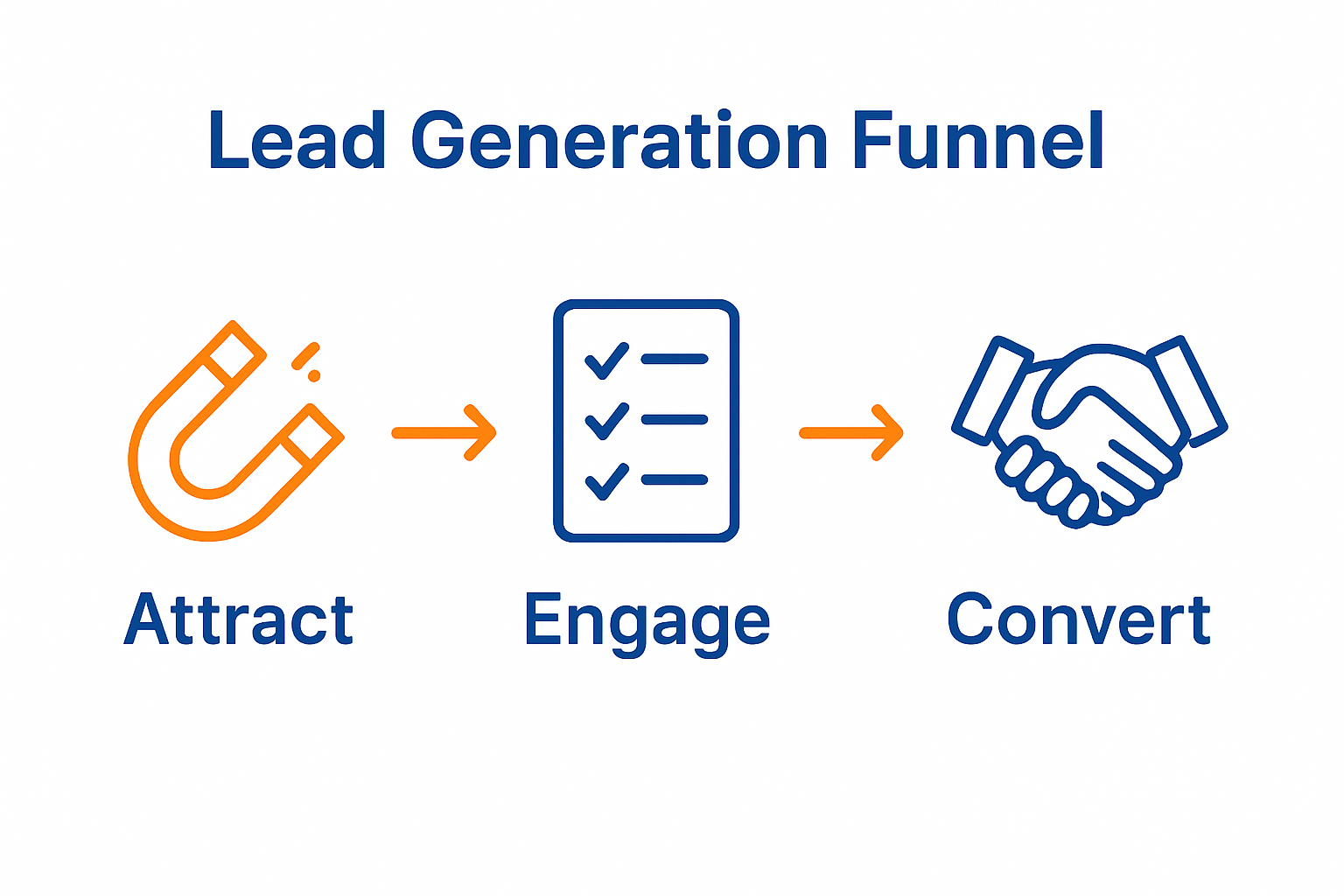
Lead Generation Costs and Return on Investment
Understanding the financial dynamics of lead generation is crucial for small to medium businesses seeking sustainable growth. According to Catalyst Connection, effective lead generation requires carefully measuring the costs associated with various strategies like content creation and paid advertising, while simultaneously tracking key performance metrics to ensure cost-effectiveness.
Investment Breakdown reveals that lead generation expenses vary widely depending on the chosen strategies. eMarketing Institute suggests businesses must analyze the performance of different techniques such as SEO, email marketing, and social media campaigns to determine which methods provide the highest return on investment relative to their associated costs.
Key factors influencing lead generation costs and ROI include:
-
Strategy Complexity
More sophisticated lead generation approaches typically require higher upfront investments but can yield more qualified leads. -
Customer Acquisition Cost (CAC)
Calculating the total expense of acquiring a single customer, including marketing and sales efforts. -
Conversion Rate
Measuring the percentage of leads that transform into paying customers, which directly impacts overall ROI. -
Long-Term Value
Considering not just immediate sales, but the potential lifetime value of acquired customers.
By exploring conversion rate improvement strategies, businesses can optimize their lead generation investments and maximize their marketing efficiency.
Common Mistakes When Implementing Lead Generation
Navigating the complex landscape of lead generation requires strategic planning and awareness of potential pitfalls. According to Catalyst Connection, many businesses stumble by neglecting to define a clear target audience and failing to align their content with specific customer needs, which significantly undermines lead generation effectiveness.
Strategic Execution is critical in avoiding common lead generation mistakes. eMarketing Institute highlights that businesses frequently overlook the importance of user experience and consistent lead engagement, which can dramatically reduce conversion potential. Understanding these pitfalls helps small to medium businesses develop more robust marketing strategies.
Most prevalent lead generation mistakes include:
-
Undefined Target Audience
Attempting to appeal to everyone, which results in messaging that resonates with no one and wastes marketing resources. -
Inconsistent Follow-Up
Failing to maintain timely and meaningful communication with potential leads, causing interest to quickly diminish. -
Poor Website Design
Creating websites that are difficult to navigate, lack clear calls-to-action, or appear unprofessional. -
Neglecting Data Analysis
Not tracking key performance metrics or adjusting strategies based on lead generation performance. -
Misaligned Content
Producing content that doesn’t address specific customer pain points or provide genuine value.
By exploring the role of ad copy in lead generation, businesses can refine their approach and minimize these common strategic errors.
Unlock the True Power of Lead Generation for Your Business
Struggling to consistently attract qualified leads and convert them into paying customers can feel overwhelming. This article breaks down how targeted strategies like content marketing, SEO, and email nurturing are essential to turning interested prospects into loyal clients. If you are ready to overcome common challenges such as undefined target audiences and poor follow-up, let us help you build a customized lead generation system that works.
Explore proven solutions tailored for small to medium businesses in the Uncategorized Archives – Click Thrive Marketing. Our expert team specializes in optimizing Google Ads campaigns and creating data-driven marketing strategies that boost your conversion rates and maximize ROI. Dont wait to transform your lead generation efforts into a predictable, scalable growth engine. Visit Click Thrive Marketing now to get started and take control of your customer acquisition process.
Frequently Asked Questions
What is lead generation?
Lead generation is the process of identifying and attracting potential customers who show interest in your product or service, with the aim of converting them into qualified leads.
Why is quality more important than quantity in lead generation?
Focusing on quality over quantity means attracting a smaller number of highly targeted and interested prospects, which leads to higher conversion rates than a larger pool of disinterested contacts.
What are some effective lead generation strategies for small to medium businesses?
Effective lead generation strategies include content marketing, search engine optimization (SEO), social media marketing, email marketing, and pay-per-click (PPC) advertising, among others.
How can lead generation drive business growth?
Lead generation drives business growth by establishing a predictable revenue stream, targeting specific audience segments, providing competitive market positioning, and offering data-driven insights that refine marketing strategies.
Recommended
- How to Generate Leads for Small Businesses Online – Click Thrive Marketing
- Role of Ad Copy in Lead Generation: Complete Guide – Click Thrive Marketing
- 7 Real Examples of Google Ads Campaigns for Business Growth – Click Thrive Marketing
- Business Growth Strategies Explained: Complete Overview – Click Thrive Marketing
- Role of PPC in Lead Generation: Complete Guide | Website Design & Google Ads That Generate Leads