
Over 80 percent of american businesses now rely on advanced tools to track ad performance and guide their marketing spend. In a world where every dollar must work harder, understanding real results from each campaign matters more than ever. This article reveals how ad performance tracking cuts through guesswork, turns numbers into action, and empowers marketers with the insights needed for smarter, more profitable choices.
Table of Contents
- Defining Ad Performance Tracking And Its Purpose
- Key Metrics And Tools For Accurate Ad Measurement
- Benefits Of Monitoring Your Advertising Campaigns
- Common Pitfalls And How To Avoid Them
- Maximizing Roi Through Data-Driven Decisions
Key Takeaways
| Point | Details |
|---|---|
| Importance of Ad Performance Tracking | Effective tracking provides insights that help marketers optimize campaigns, allocate resources efficiently, and align advertising metrics with business objectives. |
| Key Metrics for Measurement | Understanding metrics such as CTR, CPA, and ROAS is crucial for gaining deeper insights into advertising effectiveness and improving strategic decisions. |
| Benefits of Continuous Monitoring | Ongoing campaign monitoring enables businesses to make real-time adjustments and enhances understanding of audience engagement, leading to improved outcomes. |
| Common Pitfalls to Avoid | Avoid focusing solely on vanity metrics, inconsistent tracking, and misaligned goals to ensure a well-rounded approach to advertising performance measurement. |
Defining Ad Performance Tracking and Its Purpose
Ad performance tracking is a strategic process of monitoring, measuring, and analyzing the effectiveness of advertising campaigns across various digital platforms. According to OpenStax, this systematic approach allows businesses to understand how well their advertising efforts are generating desired outcomes and delivering return on investment.
The primary purpose of ad performance tracking extends beyond simple measurement. It provides critical insights that enable marketers to make data-driven decisions, optimize campaign strategies, and allocate resources more efficiently. As research from the University of Wisconsin suggests, effective tracking helps organizations align their advertising metrics with specific marketing objectives, ensuring that every advertising dollar is strategically spent.
Tracking ad performance involves several key components and metrics, including:
- Click-through rates (CTR)
- Conversion rates
- Cost per acquisition (CPA)
- Return on ad spend (ROAS)
- Engagement metrics
By comprehensively monitoring these indicators, businesses can rapidly identify what’s working, what needs improvement, and how to adjust their advertising strategies for maximum impact. The goal is not just to collect data, but to transform that data into actionable insights that drive better marketing outcomes and business growth.
Key Metrics and Tools for Accurate Ad Measurement
Accurate ad measurement requires a comprehensive understanding of key performance metrics and sophisticated tracking tools. According to OpenStax, businesses can leverage essential key performance indicators (KPIs) like impressions, click-through rates, and conversion rates to gain meaningful insights into their advertising effectiveness.
The landscape of ad measurement tools has evolved dramatically, offering marketers unprecedented capabilities for tracking campaign performance. Kellogg School of Management research highlights the importance of selecting the right measurement approach to accurately assess advertising impact. Modern tools provide granular data that goes beyond traditional metrics, enabling marketers to understand complex customer interactions and campaign dynamics.
Critical metrics for accurate ad measurement include:
- Impressions: Total number of times an ad is displayed
- Click-through Rate (CTR): Percentage of people who click on an ad
- Conversion Rate: Percentage of clicks that result in a desired action
- Cost per Acquisition (CPA): Total cost of acquiring a single customer
- Return on Ad Spend (ROAS): Revenue generated for every dollar spent on advertising
To maximize the effectiveness of ad tracking, businesses should integrate multiple measurement tools like ad targeting tools that provide comprehensive insights. By combining advanced analytics platforms, conversion tracking systems, and robust reporting mechanisms, marketers can develop a holistic understanding of their advertising performance and make data-driven strategic decisions.

Benefits of Monitoring Your Advertising Campaigns
Monitoring advertising campaigns provides businesses with critical insights that drive strategic decision-making and optimize marketing performance. According to OpenStax, systematic campaign monitoring allows marketers to assess effectiveness, align strategies with business objectives, and make data-driven improvements.
The strategic benefits of continuous advertising campaign monitoring extend far beyond simple performance tracking. University of Wisconsin research highlights that regular monitoring leads to more intelligent resource allocation, enhanced campaign outcomes, and a deeper understanding of audience engagement. By consistently evaluating campaign metrics, businesses can quickly identify strengths, address weaknesses, and pivot strategies in real-time.
Key benefits of monitoring advertising campaigns include:
- Immediate Performance Insights: Real-time data on campaign effectiveness
- Cost Optimization: Identifying and eliminating underperforming ad strategies
- Audience Understanding: Gaining deeper insights into customer behaviors and preferences
- Competitive Advantage: Quickly adapting strategies based on performance metrics
- Budget Efficiency: Redirecting resources to high-performing channels and tactics
For comprehensive campaign tracking, businesses should leverage performance marketing strategies that provide holistic views of advertising efforts. By embracing a proactive approach to monitoring, organizations can transform raw data into actionable intelligence, ultimately driving more meaningful and profitable marketing outcomes.
Common Pitfalls and How to Avoid Them
Advertising performance tracking presents numerous challenges that can derail marketing effectiveness if not carefully managed. Kellogg School of Management research highlights the critical importance of understanding and avoiding common measurement pitfalls that can lead to misguided strategic decisions.
One of the most significant measurement challenges stems from over-reliance on limited or isolated metrics. According to OpenStax, marketers often make the mistake of focusing on single performance indicators without considering the broader context of their advertising efforts. This narrow approach can create a distorted view of campaign performance and lead to ineffective strategy adjustments.
Common pitfalls in ad performance tracking include:
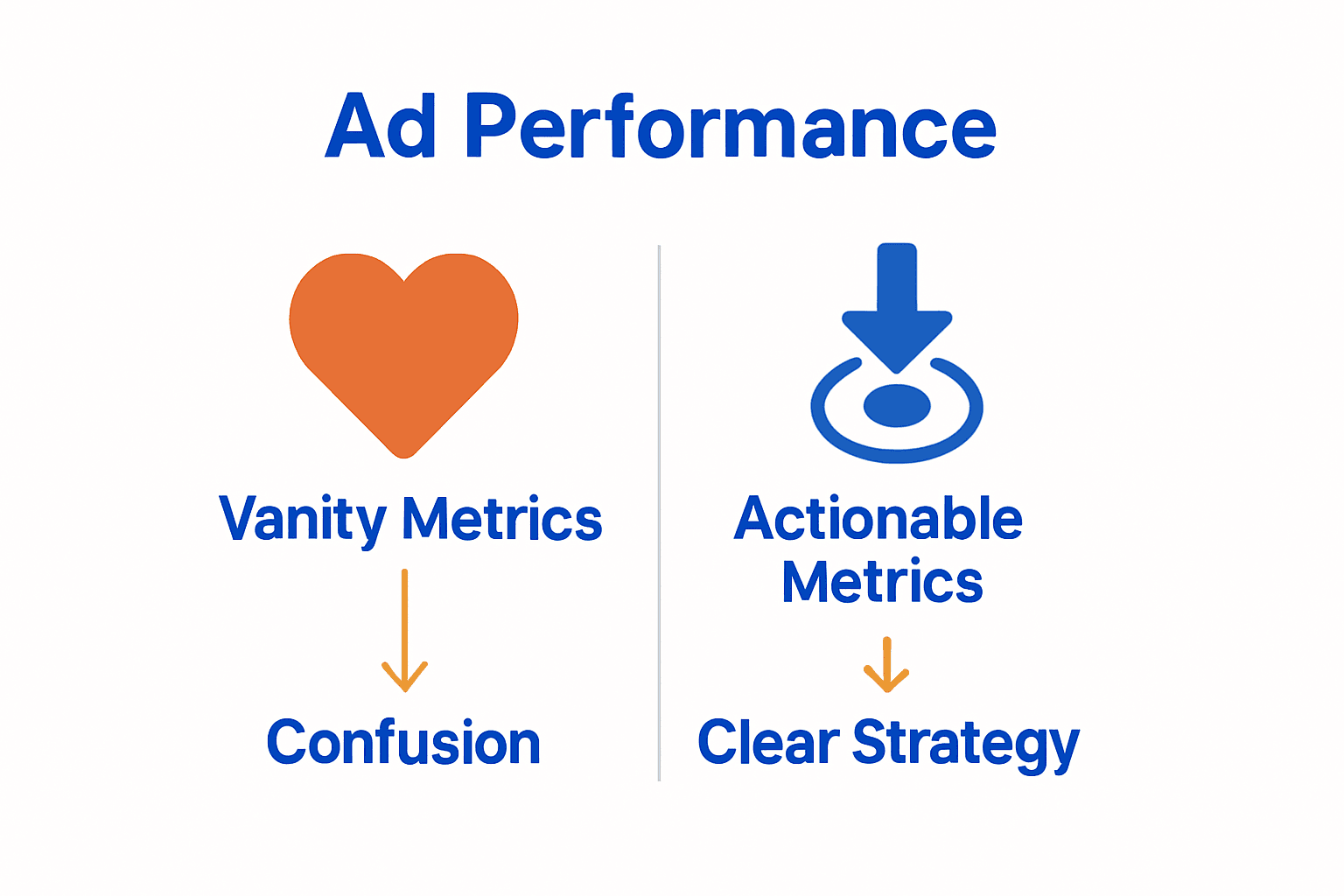
- Metric Myopia: Fixating on vanity metrics that don’t drive real business results
- Inconsistent Tracking: Failing to maintain consistent measurement methodologies
- Misaligned Goals: Not connecting advertising metrics to core business objectives
- Data Interpretation Errors: Misunderstanding or misrepresenting performance data
- Neglecting Contextual Factors: Ignoring external influences on campaign performance
To navigate these challenges effectively, businesses should leverage performance marketing strategies that provide comprehensive, holistic approaches to campaign measurement. By developing a nuanced, multi-dimensional view of advertising performance, organizations can avoid common pitfalls and make more informed, data-driven marketing decisions.
Maximizing ROI Through Data-Driven Decisions
Data-driven decision-making represents the most powerful approach to optimizing advertising performance and maximizing return on investment. OpenStax emphasizes that leveraging precise performance metrics allows businesses to transform raw data into strategic insights that directly impact bottom-line results.
The strategic transformation of advertising efforts requires a comprehensive approach to data analysis. According to Kellogg School of Management, successful ROI maximization depends on accurately interpreting complex performance metrics and understanding their interconnected nature. This nuanced approach goes beyond surface-level analysis, enabling marketers to uncover hidden opportunities and make more intelligent resource allocation decisions.
Key strategies for maximizing ROI through data-driven decisions include:
- Granular Performance Analysis: Breaking down metrics across multiple dimensions
- Predictive Modeling: Using historical data to forecast future campaign performance
- Continuous Optimization: Implementing real-time adjustments based on performance insights
- Cross-Channel Comparison: Evaluating performance across different marketing platforms
- Segmentation Strategies: Tailoring approaches to specific audience segments
Businesses seeking to elevate their marketing effectiveness can explore comprehensive performance marketing processes that transform data into actionable strategies. By embracing a holistic, data-driven approach, organizations can systematically improve advertising performance, reduce wasteful spending, and consistently achieve higher returns on their marketing investments.
Take Control of Your Ad Performance and Maximize Your Marketing Impact
Tracking your advertising performance effectively is essential to avoid costly mistakes and to boost your return on ad spend. From understanding key metrics like click-through rates and cost per acquisition to avoiding pitfalls such as metric myopia, you need more than just numbers—you need a trusted partner who can turn data into powerful growth strategies. At Click Thrive Marketing, we specialize in optimizing Google Ads campaigns and generating high-quality leads that translate into real business results.
Ready to stop guessing and start growing? Visit our Uncategorized Archives – Click Thrive Marketing for expert insights and explore how our tailored Google Ads management and lead generation services can help you make data-driven decisions today. Don’t wait to unlock your campaign’s full potential—partner with us now to transform your ad performance and achieve sustainable business growth.
Frequently Asked Questions
What is ad performance tracking?
Ad performance tracking is the process of monitoring, measuring, and analyzing the effectiveness of advertising campaigns across various digital platforms to understand how well advertising efforts achieve desired outcomes and return on investment.
Why is it important to monitor ad performance?
Monitoring ad performance is crucial because it provides insights that help marketers make data-driven decisions, optimize campaign strategies, and allocate resources efficiently. It ensures that advertising efforts align with business objectives and improve overall marketing outcomes.
What are some key metrics used in ad performance tracking?
Key metrics include Click-through Rate (CTR), Conversion Rate, Cost per Acquisition (CPA), Return on Ad Spend (ROAS), and Engagement Metrics. These indicators help businesses understand the effectiveness of their advertising campaigns.
How can businesses avoid common pitfalls in ad performance tracking?
To avoid pitfalls like metric myopia and inconsistent tracking, businesses should use comprehensive performance marketing strategies, ensure that advertising metrics align with core business objectives, and regularly review their measurement methodologies.
Recommended
- Performance Marketing Explained: Key Concepts and Strategies – Click Thrive Marketing
- Ad Targeting Explained: Maximizing ROI With Precision – Click Thrive Marketing
- Performance Marketing Process for Maximizing ROI Results – Click Thrive Marketing
- What Is Online Advertising? Complete Digital Guide – Click Thrive Marketing