
Most american businesses now rely on digital ads to connect with new customers, but over 60 percent struggle to turn clicks into real leads. Clear and persuasive ad copy can be the crucial factor that separates a forgettable ad from one that drives results. Discover what sets high-performing ad campaigns apart and see how the right language can transform casual interest into meaningful engagement for your brand.
Table of Contents
- Defining Ad Copy For Lead Generation Success
- Elements Of High-Converting Ad Copy
- Ad Copy Variations And Targeting Strategies
- Optimizing Ad Copy For Different Business Types
- Common Mistakes And Pitfalls To Avoid
Key Takeaways
| Point | Details |
|---|---|
| Effective ad copy is essential for engagement | Ad copy should transform casual interest into measurable engagement through clear value propositions and compelling calls-to-action. |
| Understand your audience for targeting | Tailoring ad copy to specific audience segments increases engagement and conversion rates by addressing their unique motivations and challenges. |
| Emotional appeal matters | Connecting with audiences on an emotional level enhances the effectiveness of ad copy, making it more memorable and persuasive. |
| Avoid common mistakes | Addressing clarity, specificity, and direct calls-to-action while avoiding jargon and fluff is crucial for impactful ad copy. |
Defining Ad Copy for Lead Generation Success
Ad copy represents the strategic text used in advertisements designed to capture audience attention and drive potential customers toward taking a specific action. As recent research from arxiv.org demonstrates, crafting effective ad copy requires sophisticated approaches that go beyond traditional marketing techniques.
At its core, ad copy functions as a critical communication bridge between businesses and potential leads. The primary goal is transforming casual interest into measurable engagement. According to advanced research by arxiv.org, modern ad copy generation now leverages sophisticated techniques like machine learning and contrastive learning to optimize messaging for higher click-through rates and lead conversion.
Successful ad copy typically incorporates several key strategic elements:
- Clear value proposition
- Compelling call-to-action
- Targeted emotional triggers
- Precise language matching audience needs
- Concise yet informative messaging
By understanding these fundamental components, businesses can craft ad copy that doesn’t just communicate information, but actively persuades potential customers to take the next step in their buyer journey. Check out our guide on Google Ads best practices for deeper insights into creating high-performing digital advertisements.
Elements of High-Converting Ad Copy
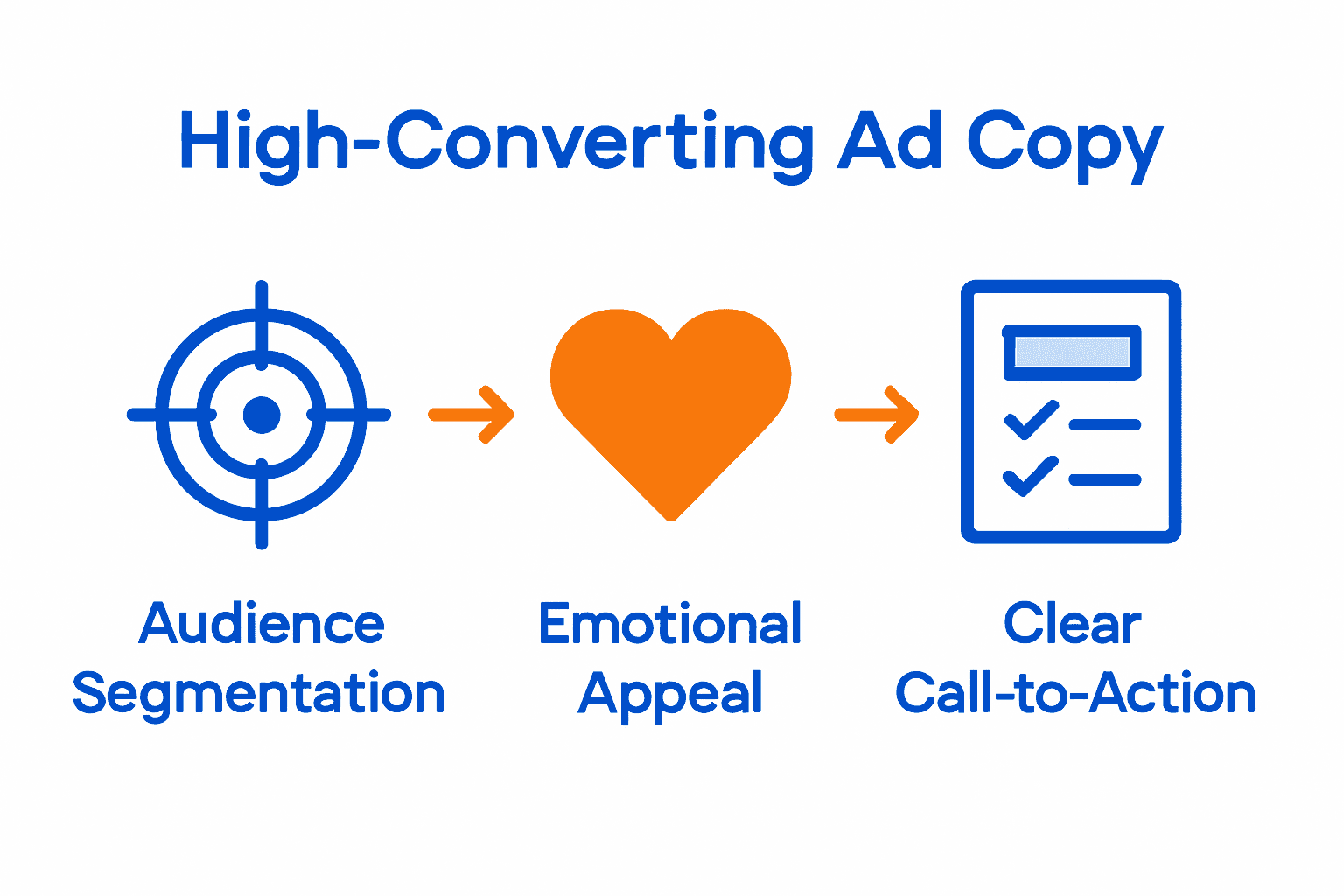
Crafting high-converting ad copy requires a strategic blend of psychological triggers and precise messaging designed to capture potential customers’ attention instantly. According to businesswritingblog.com, successful ad copy hinges on critical elements like clarity, emotional resonance, and value-driven communication that compel viewers to take action.
Emotional appeal stands as a cornerstone of effective ad copywriting. Professionals understand that connecting with audiences goes beyond presenting facts. Media.asicentral.com highlights the importance of crafting messages that speak directly to potential customers’ desires, fears, and aspirations.
Key elements of high-converting ad copy include:
- Attention-grabbing headlines
- Clear value proposition
- Compelling emotional triggers
- Strong call-to-action
- Concise and precise language
- Visual storytelling
Successful businesses recognize that ad copy is more than just words. It’s a strategic tool for connecting with potential leads. Learn more about ad targeting strategies to enhance your marketing approach and maximize your conversion potential. By understanding and implementing these core elements, marketers can create ad copy that not only captures attention but drives meaningful engagement and generates high-quality leads.

Ad Copy Variations and Targeting Strategies
Creating effective ad copy requires a nuanced approach to audience targeting and messaging variation. Advanced research from arxiv.org reveals sophisticated methods for refining ad creatives through strategic generation and ranking techniques, emphasizing the critical importance of tailoring ad copy to specific audience segments.
Demographic targeting represents a powerful strategy for maximizing ad copy effectiveness. According to research by arxiv.org, sophisticated multi-task conditional attention networks can predict ad conversions by customizing messaging to specific genres and demographic groups. This means businesses can develop multiple ad variations that speak directly to different audience personas, increasing the likelihood of engagement and conversion.
Key strategies for ad copy variations include:
- Creating persona-specific messaging
- Developing multiple headline variations
- Adapting tone for different audience segments
- Testing emotional and rational appeals
- Matching language to specific demographic characteristics
- Leveraging data-driven insights for refinement
Check out our guide on essential Google Ads types to understand how different ad formats can complement your targeting strategies. By implementing a dynamic, data-driven approach to ad copy variations, businesses can create more resonant, targeted advertising that speaks directly to potential customers’ unique needs and preferences.
Optimizing Ad Copy for Different Business Types
Ad copy optimization requires a nuanced approach that recognizes the unique characteristics and marketing challenges of different business types. Professional service providers, e-commerce platforms, local brick-and-mortar businesses, and technology startups each demand distinct messaging strategies that resonate with their specific target audiences.
Small service-based businesses like medical practices, legal firms, and home repair services benefit from ad copy that emphasizes trust and expertise. These businesses should focus on highlighting professional credentials, years of experience, and specific problem-solving capabilities. Conversely, e-commerce businesses require ad copy that creates immediate excitement, showcasing product benefits, unique selling propositions, and compelling value propositions that drive quick purchasing decisions.
Key optimization strategies for different business types include:
- Local service providers: Emphasize reliability and community connection
- E-commerce platforms: Highlight product uniqueness and immediate value
- Technology startups: Focus on innovation and problem-solving
- Professional services: Showcase expertise and credible track record
- Retail businesses: Create urgency and emotional connection
- B2B companies: Demonstrate ROI and strategic advantages
Learn how to generate leads for small businesses online and discover tailored strategies that can transform your advertising approach. By understanding the specific communication needs of different business types, marketers can craft ad copy that speaks directly to their ideal customers’ motivations, challenges, and aspirations.
Common Mistakes and Pitfalls to Avoid
Ad copywriting demands precision and strategic thinking. According to Pushground.com, many marketers fall into common traps that significantly undermine their advertising effectiveness, such as using unnecessary fluff and neglecting critical grammar checks that can erode professional credibility.
Professional marketers recognize that weak ad copy can sabotage even the most well-intentioned campaigns. ClimbTheLadder.com highlights several critical pitfalls that can derail lead generation efforts, including lack of clarity, ineffective calls-to-action, and failure to directly address potential customer pain points. These mistakes can transform potentially powerful marketing messages into forgettable, ineffective advertisements.
Common ad copy mistakes to avoid include:
- Using generic, non-specific language
- Overcomplicating messaging
- Neglecting audience-specific targeting
- Weak or absent calls-to-action
- Ignoring customer pain points
- Using excessive industry jargon
- Failing to highlight unique value propositions
- Inconsistent brand messaging
Learn conversion rate optimization strategies for small businesses to transform your approach and minimize these common pitfalls. By understanding and avoiding these critical mistakes, businesses can create more compelling, targeted, and effective ad copy that genuinely resonates with their ideal customers.
Maximize Your Lead Generation with Expert Ad Copy Strategies
Crafting the perfect ad copy is crucial to solving the challenge of turning casual clicks into high-quality leads. This guide highlights the need for clear value propositions, targeted emotional appeals, and precise messaging to break through the noise and connect with your ideal audience. If you are struggling with unclear calls-to-action or generic language that fails to engage, you are not alone. Many businesses face these pain points when trying to optimize their lead generation efforts.
At Click Thrive Marketing, we specialize in transforming complex marketing challenges into opportunities for growth through expert Google Ads management and tailored lead generation strategies. With over $30 million in managed ad spend and award-winning campaign optimizations, we know how to craft ad copy that significantly boosts engagement and conversions. Discover proven approaches to improve your online advertising outcomes by visiting our Uncategorized Archives and explore a range of marketing insights designed specifically for businesses ready to scale.
Are you ready to stop losing potential customers with ineffective ad copy and start achieving measurable results today
Take control of your lead generation by partnering with trusted experts. Visit Click Thrive Marketing now and unlock the potential of your advertising campaigns with data-driven strategies and professional guidance. Your next steps to higher conversion rates and stronger customer connections begin here.
Frequently Asked Questions
What is ad copy and its role in lead generation?
Ad copy is the strategic text used in advertisements to capture audience attention and encourage potential customers to take action. Its primary role in lead generation is to transform casual interest into measurable engagement, driving clicks and conversions.
What are the key elements of high-converting ad copy?
Key elements of high-converting ad copy include attention-grabbing headlines, a clear value proposition, compelling emotional triggers, a strong call-to-action, and concise, precise language that resonates with the target audience.
How can I optimize ad copy for different types of businesses?
To optimize ad copy for different business types, focus on their unique characteristics. For instance, service-based businesses should highlight trust and expertise, while e-commerce businesses need to create excitement and emphasize immediate value, showcasing product benefits and unique selling propositions.
What common mistakes should I avoid in ad copywriting?
Common mistakes to avoid include using generic language, overcomplicating messages, ignoring audience-specific targeting, weak calls-to-action, and failing to address customer pain points. Ensuring clarity and strategic messaging can enhance ad effectiveness.
Recommended
- How to Generate Leads for Small Businesses Online – Click Thrive Marketing
- 7 Real Examples of Google Ads Campaigns for Business Growth – Click Thrive Marketing
- Click Thrive Marketing – Click Thrive Marketing
- 7 Google Ads Best Practices Every Local Business Needs – Click Thrive Marketing
- 7 Essential Types of Business Websites and How to Use Them – Lind Creative